
Understanding how a magnet interacts with a reed switch is critical for reliable sensor and switching performance. In this article, you’ll learn: • How magnetic flux influences reed switch operation • How magnet position and movement affect contact behavior • Common magnet orientations used in reed sensor applications
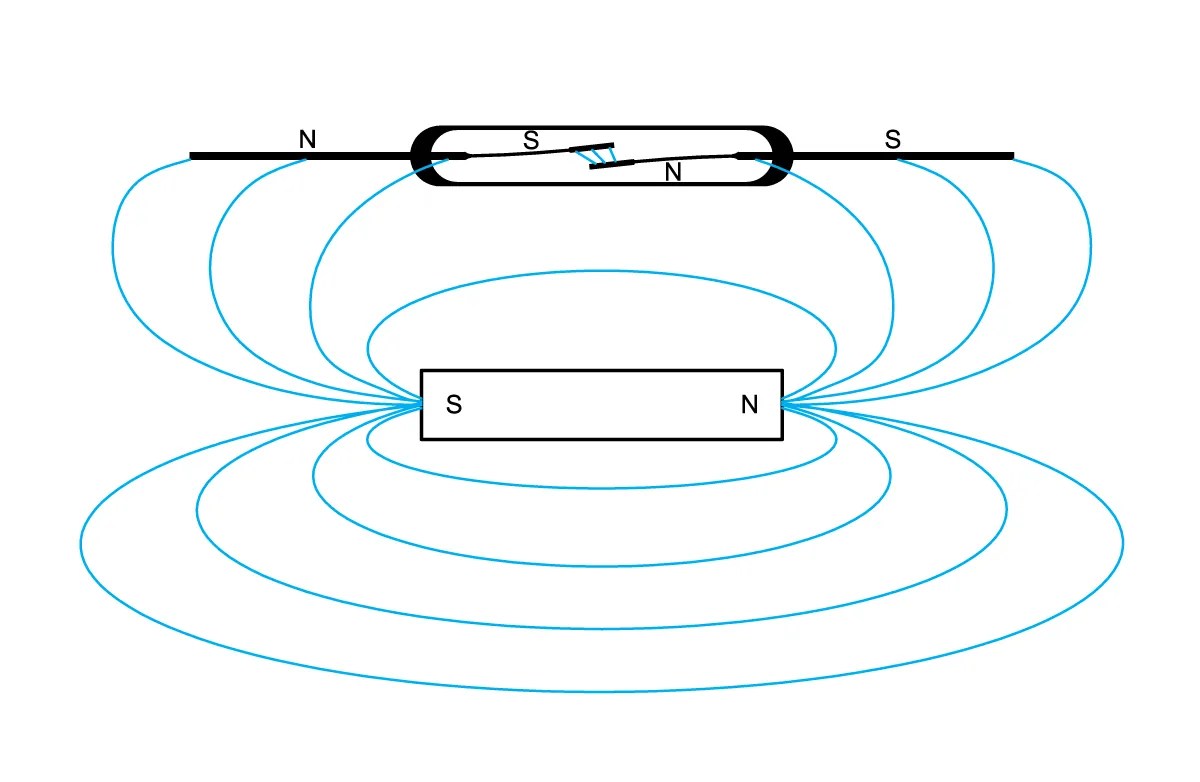
“Magnet interaction affects on reed switch operations can be understood by looking at the magnetic lines of flux and the way the magnet works.”
If there are particular areas you need help with, feel free to skip to any of the following sections:
- Introduction
- How Magnet Interaction Affects Reed Switch Contacts
- Magnetic Flux Lines and Reed Switch Operation
- How Magnet Position and Movement Control Reed Switches
- Reed Switch Operation Using a Magnet
- Conclusion
Introduction
A reed switch is an electromagnetic switching device. Two ferromagnetic blades are housed in a hermetically sealed glass envelope. It has a very simple overall structure and a temperature coefficient of expansion of glass that exactly matches NiFe reeds. Reed switch operation happens when brought into proximity of a permanent magnet. The attractive polarity of the magnet magnetizes the reed contacts.
How Magnet Interaction Affects Reed Switch Contacts
Magnet interaction affects a reed switch when a permanent magnet is brought into close proximity to the device.
As the magnet approaches the switch:
- Each reed blade becomes magnetized with attractive polarity
- The magnetic force causes the contacts to pull together
- Residual magnetism is removed during manufacturing to ensure reliable opening and closing
This controlled magnetization allows reed switches to operate repeatedly without sticking or inconsistent performance.
Magnetic Flux Lines and Reed Switch Operation
The magnetic lines of flux are the invisible energy forces created by the magnet that react to open and close the switch contacts. Once the magnet crosses the pull-in lines the contacts close. As long as the magnet stays within the pull-in boundary the contacts will remain closed. Similarly, when the magnet crosses the drop-out lines the contacts will open.
How Magnet Position and Movement Control Reed Switches
Magnet Positioned Perpendicular to the Reed Switch
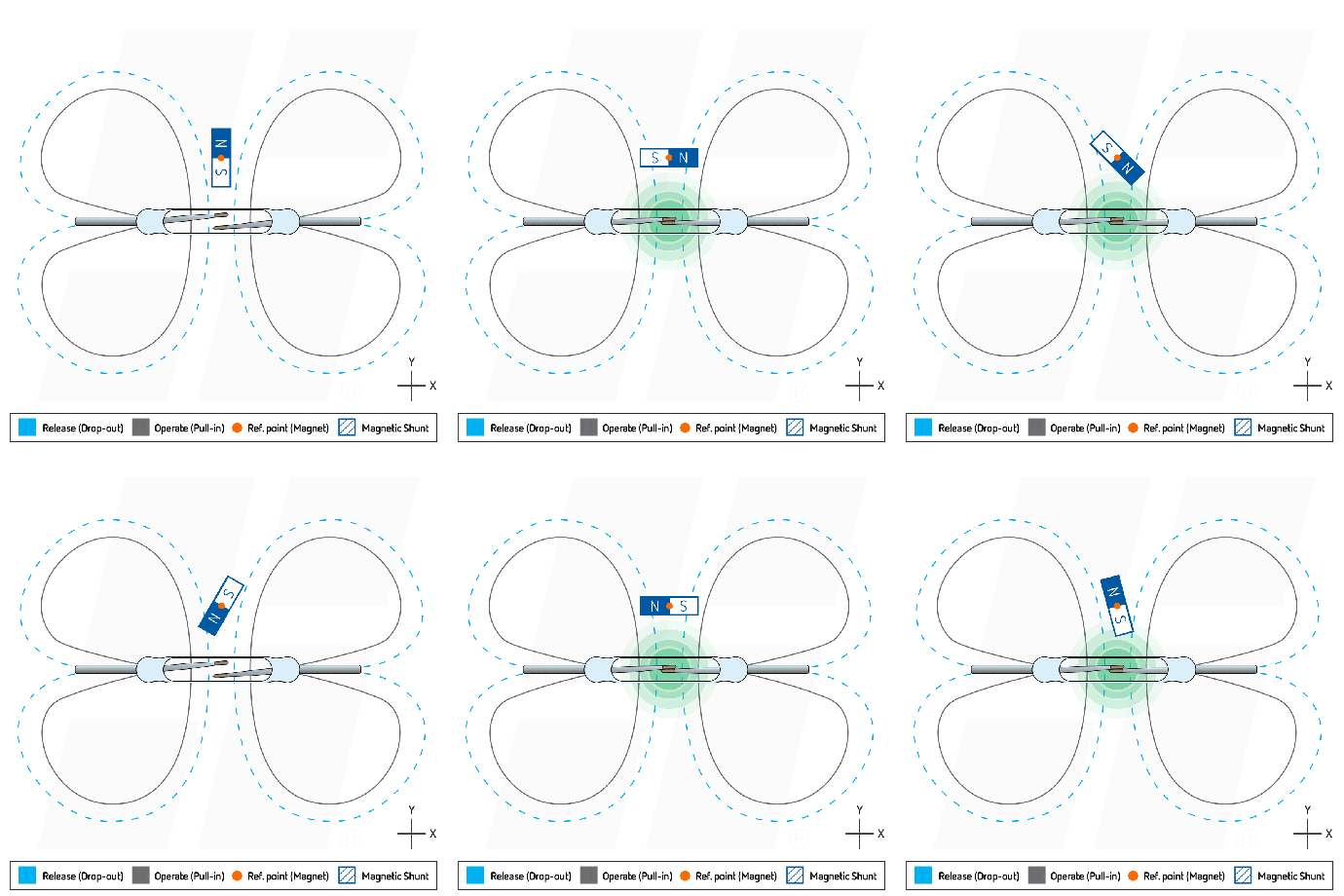
A magnet interaction affects the reed switch contacts in a few different ways. The first way is positioning the magnet perpendicular to the reed switch. Then moving the magnet downward and back up so it will travel through the lines of flux. Consequently, the contacts will open and then close again.
Magnet Positioned Parallel to the Reed Switch
The next way of making the contacts react is by having the magnet parallel to the reed switch and moving it up and down or side to side depending on where it is parallel to the reed switch. In other words, up and down movement of the magnet parallel to the switch will open and close the contacts. Likewise, moving the magnet side-to-side on either side of the switch will also cause the contacts to open and close.
Rotational Magnet Movement (90-Degree Rotation)
The last way the magnet works is rotating it 90-degrees and centered over the center lobe of the reed switch. Many applications use this approach to count rotations of mechanisms, that in turn translate the rotations to specific functions.
Reed Switch Operation Using a Magnet
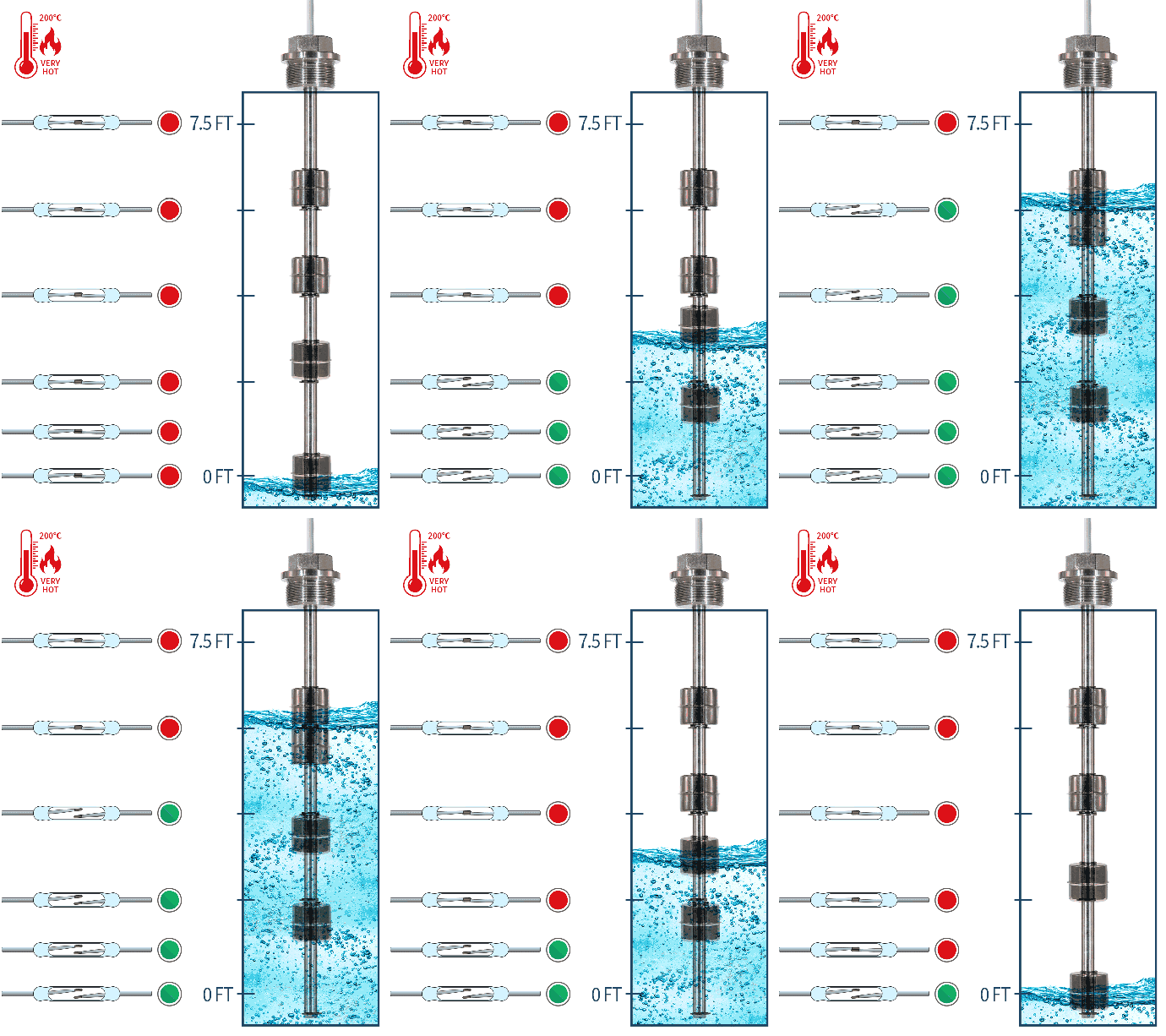
Reed sensors control on and off function using a reed switch and a magnet. Examples of reed sensor applications range from control circuits and fluid level monitoring and detection in coffee pots to car parts. Without the magnet, reed switches would not operate, and without a moving mechanism to attach to, the magnet would not move through the reed switch’s sphere of influence, which is what causes the magnetic flux to interact with the sensitivity lobe arrays, which then creates the switching function.
Conclusion
Understanding how magnet interaction influences reed switch operation is essential for designing accurate, reliable sensing solutions. Magnet strength, positioning, and movement all directly impact contact behavior and long-term performance.
As reed switch sensor applications continue to grow across industries from appliances and automotive systems to industrial automation proper magnet selection and placement become increasingly critical.
The Standex Detect team brings decades of reed switch and sensor expertise to help engineers optimize designs for performance and reliability. Contact our team to learn more about our engineered reed switch and sensor solutions.
Related Articles
-
High-Voltage Insulation Monitoring for Next-Generation BESS
Learn how insulation monitoring helps improve safety, reliability, uptime, and asset protection in Battery Energy Storage Systems (BESS). Explore high-voltage monitoring solutions for 1,000–1,500 VDC energy storage applications.
-
When Standard Sensors Aren’t Enough
Real-world applications rarely operate under ideal conditions. Temperature extremes, fluid exposure, vibration, contamination, and limited installation space can all impact sensing performance and long-term reliability. Learn how custom sensor solutions help overcome these challenges and deliver reliable operation in demanding industrial, transportation, EV, agricultural, and energy applications.
-
Reliable Sensing for Safer, More Efficient EV Systems
Learn how reliable sensing supports safer, more efficient EV systems. Explore applications in battery management, charging systems, fluid monitoring, and safety detection and discover how advanced sensing technologies help improve performance, reliability, and operational safety.
-

Designing High-Density Switching Architectures Without Sacrificing Precision
Learn how engineers can increase channel density while managing capacitance, crosstalk, and PCB design constraints in modern semiconductor test systems.
-
Eliminating Downtime in Motion Systems with Precision Sensing
Learn how precision sensing helps eliminate downtime in industrial motion systems. Explore real‑world applications in automation, high‑power loads, and fluid‑dependent systems and see how reliable sensing improves uptime and system performance.