
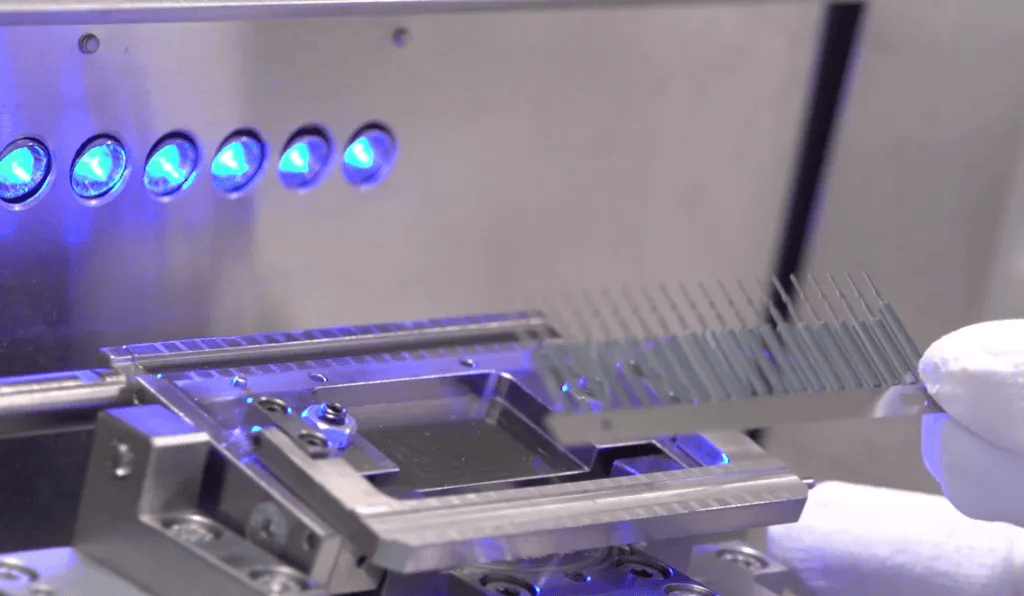
What is a Reed Switch and How Does it Work – A reed switch is an electromechanical switching device that uses a magnetic field to open or close contacts sealed inside a glass envelope. Because the contacts are hermetically sealed, reed switches deliver exceptional reliability, long life, and consistent performance even in harsh environments.
If there are particular areas you need help with, feel free to skip to any of the following sections:
- What is a Reed Switch?
- How Does a Reed Switch Work?
- Common Reed Switch Applications
- History of Reed Switch Technology
- Why Reed Switches Remain Essential Today
Standex Detect has expert engineers and cutting-edge manufacturing capabilities. Standex is the largest global leader in customer-specific product development and manufacturing services. We produce unique solutions for just about any environment or application. For example, the reed switch is one of our most successful and most widely employed developments. As the world’s largest reed switch manufacturer, we produce more than 700 million reed contacts per year.
What is a Reed Switch?
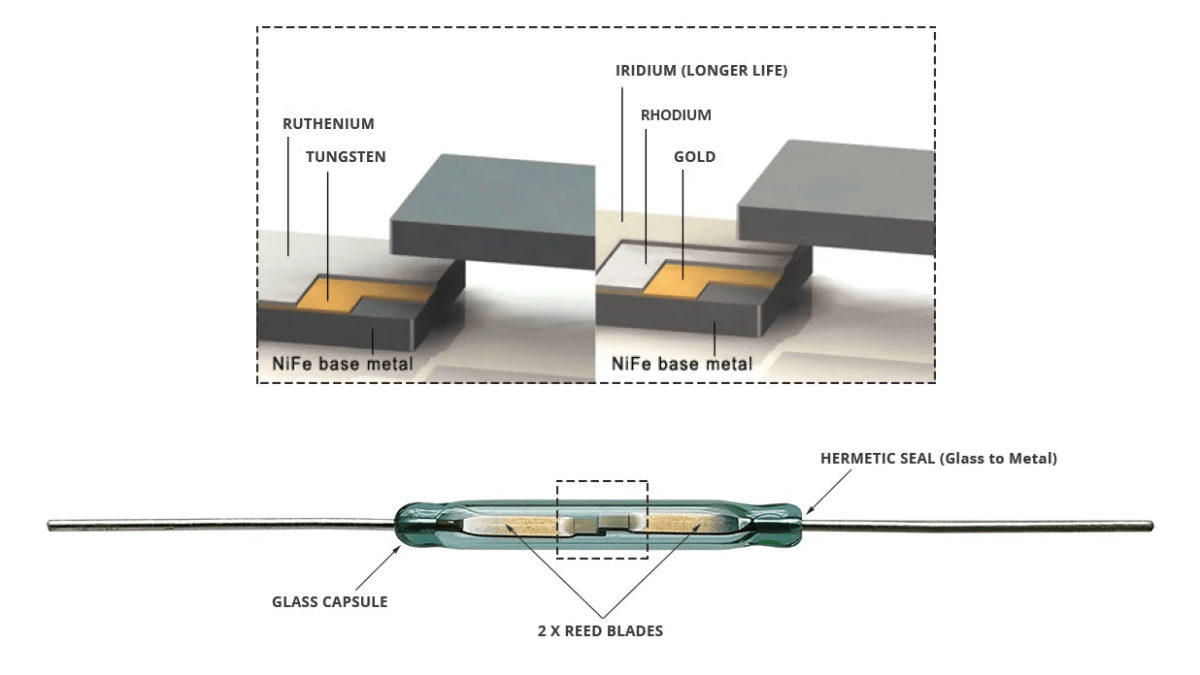
A reed switch is an electromechanical switching device. The overall structure is simple. Two ferromagnetic blades that are hermetically sealed in a glass envelope. In other words, these components can exist or be used in almost any environment. Furthermore, the glass envelope has a temperature coefficient that exactly matches the Nickel Iron (NiFe) reeds.
A simple magnet interaction opens and closes the reed contacts. More precisely, the presence (or absence) of a magnetic field produced by a permanent magnet or electromagnetic coil causes the contacts to open or close. No power is consumed when the switch contacts are open. The simplicity of this structure and operation allows reed switches to have no wearing parts and perform reliably as a “switch” for billions of operations in numerous industries. Today, all major market segments use Reed Switch Technology. For example, test and measurement equipment, medical electronics, telecom, automotive, security, and appliances all use reed-based switching components. So, it’s no wonder, the Reed switch growth rate is stronger than ever, where the world output cannot stay abreast with demand.
How Does a Reed Switch Work? (Step-by-Step)
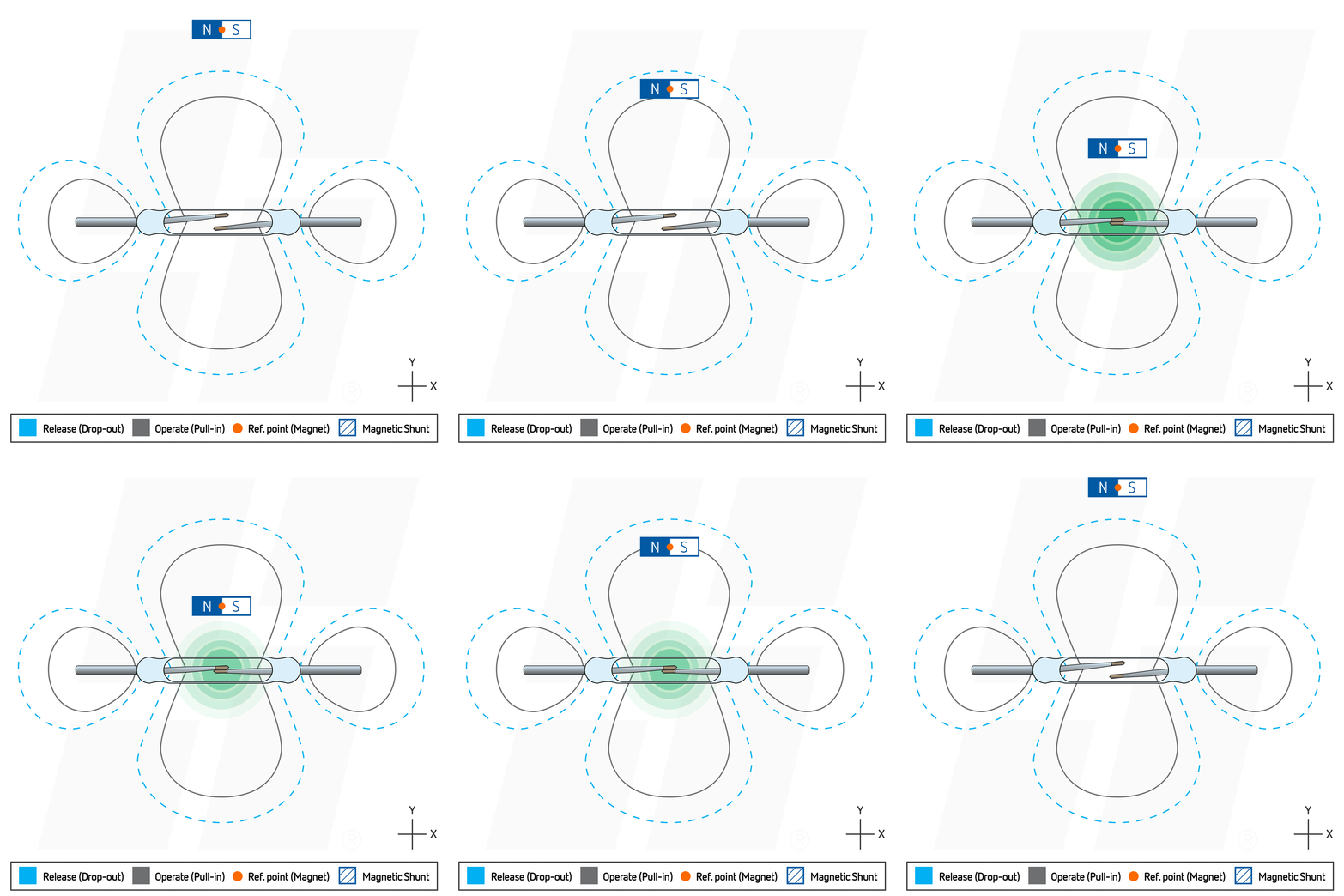
Reed switches operate using a simple and highly reliable magnetic principle:
- A permanent magnet or electromagnetic coil approaches the reed switch.
- The magnetic field magnetizes the ferromagnetic reed blades.
- The attractive force pulls the reeds together, closing the circuit.
- When the magnetic field is removed, the blades separate and the circuit opens.
To prevent erratic behavior, the reed blades are annealed to remove residual magnetism, ensuring consistent opening and closing.
Common Reed Switch Applications
Reed switches are widely used across industries due to their reliability and long operational life, including:
- Test and measurement equipment
- Medical devices and diagnostic systems
- Telecommunications infrastructure
- Automotive sensing applications
- Security and safety systems
- Consumer and industrial appliances
History of Reed Switch Technology
Bell Labs first invented the reed switch in the late 1930s. Although they have been in use for decades, not much has changed in regards to the operating principles of reed switches. In the 1940s, sensors and relays widely used reed switch technology. Moreover, early electronic and test equipment used reed switch components to perform stepping and switching functions. In the late 1940s, Western Electric central office telephone switch stations began using reed relays. Reed switch technology greatly improved telecommunications both in the 1940’s and still today.
Why Reed Switches Remain Essential Today
Due to their exemplary performance, new uses for reed switches continue to rise at a quickening pace. The Standex team is standing by to fill the ever-changing needs of customers across industries, and across the world, through our Partner, Solve, Deliver® approach. Get in touch with our team at to learn more about our carefully engineered solutions.
Looking for a custom reed switch solution? Contact our engineers to discuss your applicatio
Related Articles
-

Where System Performance Meets Switching Design
Discover how relay characteristics influence signal integrity, measurement accuracy, and overall system performance. Learn why the switching path should be considered part of the measurement architecture.
-

High-Voltage Insulation Monitoring for Next-Generation BESS
Learn how insulation monitoring helps improve safety, reliability, uptime, and asset protection in Battery Energy Storage Systems (BESS). Explore high-voltage monitoring solutions for 1,000–1,500 VDC energy storage applications.
-
When Standard Sensors Aren’t Enough
Real-world applications rarely operate under ideal conditions. Temperature extremes, fluid exposure, vibration, contamination, and limited installation space can all impact sensing performance and long-term reliability. Learn how custom sensor solutions help overcome these challenges and deliver reliable operation in demanding industrial, transportation, EV, agricultural, and energy applications.
-
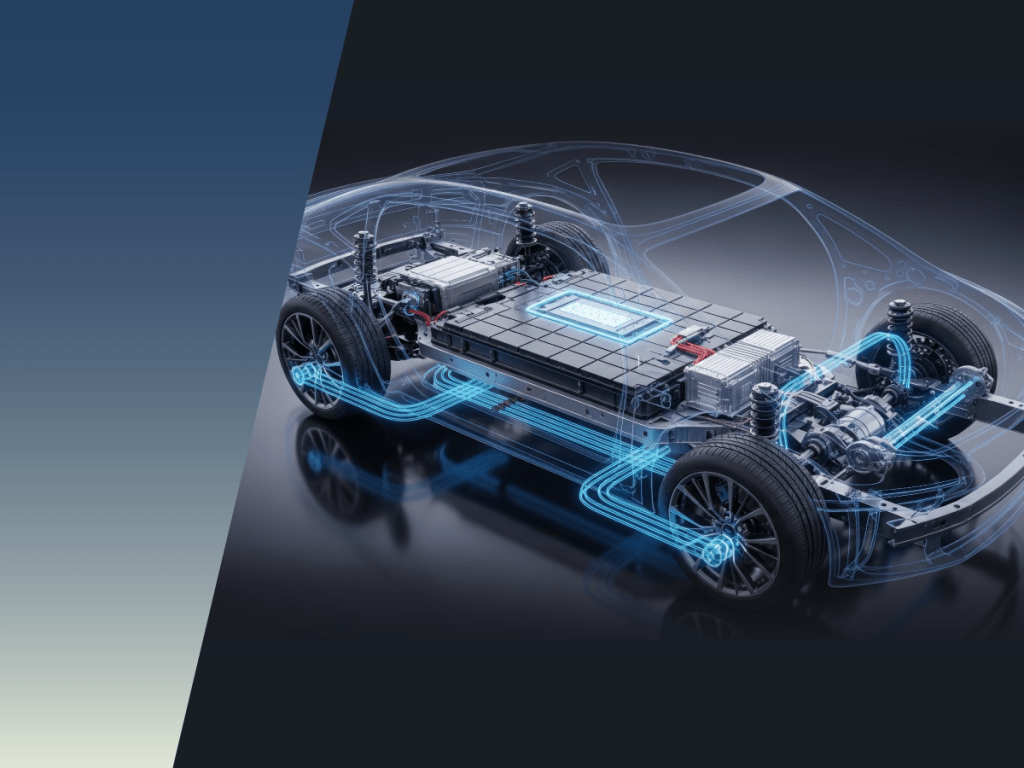
Reliable Sensing for Safer, More Efficient EV Systems
Learn how reliable sensing supports safer, more efficient EV systems. Explore applications in battery management, charging systems, fluid monitoring, and safety detection and discover how advanced sensing technologies help improve performance, reliability, and operational safety.
-

Designing High-Density Switching Architectures Without Sacrificing Precision
Learn how engineers can increase channel density while managing capacitance, crosstalk, and PCB design constraints in modern semiconductor test systems.