
Application-Specific Sensors Designed to Meet Your Requirements Without Sacrificing Performance
Real-world applications rarely operate under ideal conditions. Temperature extremes, fluid exposure, vibration, contamination, and limited installation space can all impact sensing performance and long-term reliability. Learn how custom sensor solutions help overcome these challenges and deliver reliable operation in demanding industrial, transportation, EV, agricultural, and energy applications.
If there are particular areas you need help with, feel free to skip to any of the following sections:
- Why Standard Sensors Fail in Harsh Operating Environments
- Engineered Sensing Solutions Designed to Meet Your Requirements
- Why Choose Standex Detect for Custom-Designed Sensor Solutions?
- Frequently Asked Questions About Custom Sensor Solutions
- Partnering for Precision: Custom Sensor Solutions Designed to Fit Your Needs
Introduction
Real-world applications rarely operate under ideal conditions.
Temperature extremes, vibration, contamination, fluid exposure, and limited installation space can all affect sensing performance and long-term reliability.
When these challenges exceed the capabilities of standard products, application-specific sensing solutions help bridge the gap between operating conditions and reliable performance. By understanding your requirements first, Standex Detect develops custom-designed solutions engineered to fit your needs without sacrificing performance.
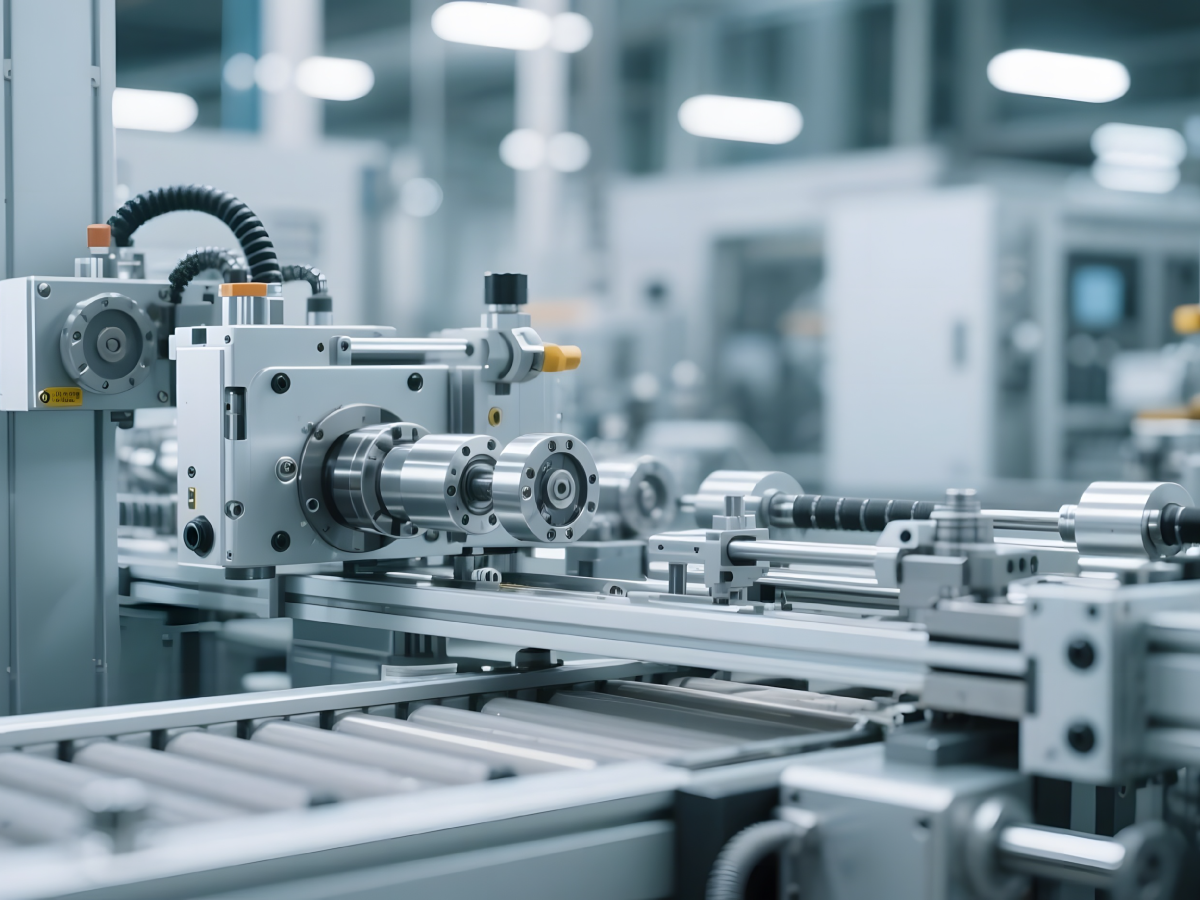
When operating
environments become more demanding, application-specific sensing solutions help bridge the gap between standard products and application requirements.
Jump to: Introduction | The Hidden Cost of Using the Wrong Sensor | Real-World Challenges Require Application-Specific Solutions | Why Standard Sensors Fail | Engineered Sensing Solutions Designed to Meet Your Requirements | Why Choose Standex Detect? | FAQs | Partnering for Precision
The Hidden Cost of Using the Wrong Sensor
Many sensing failures don’t occur because the technology is wrong.
They occur because the application environment is more demanding than the sensor was designed to handle.
Common consequences include:
 | Missed detections |
 | Unexpected downtime |
 | Premature sensor failure |
 | Increased maintenance |
 | Reduced operational efficiency |
Reliable sensing starts with understanding the application,
not simply selecting a product.
Jump to: Introduction | The Hidden Cost of Using the Wrong Sensor | Real-World Challenges Require Application-Specific Solutions | Why Standard Sensors Fail | Engineered Sensing Solutions Designed to Meet Your Requirements | Why Choose Standex Detect? | FAQs | Partnering for Precision
Real-World Challenges Require Application-Specific Solutions
Every application presents a unique combination of environmental, mechanical, and performance requirements. That is why many customers turn to Standex Detect for application-specific solutions designed around their actual operating conditions.
Extreme Temperature Sensors for Demanding Applications
Industrial, transportation, agricultural, and outdoor systems often operate far beyond controlled laboratory environments.
Extreme heat, cold, and rapid temperature shifts can impact sensor performance, installation requirements, and long-term reliability.
Engineered sensing solutions help maintain consistent operation across demanding environmental conditions.
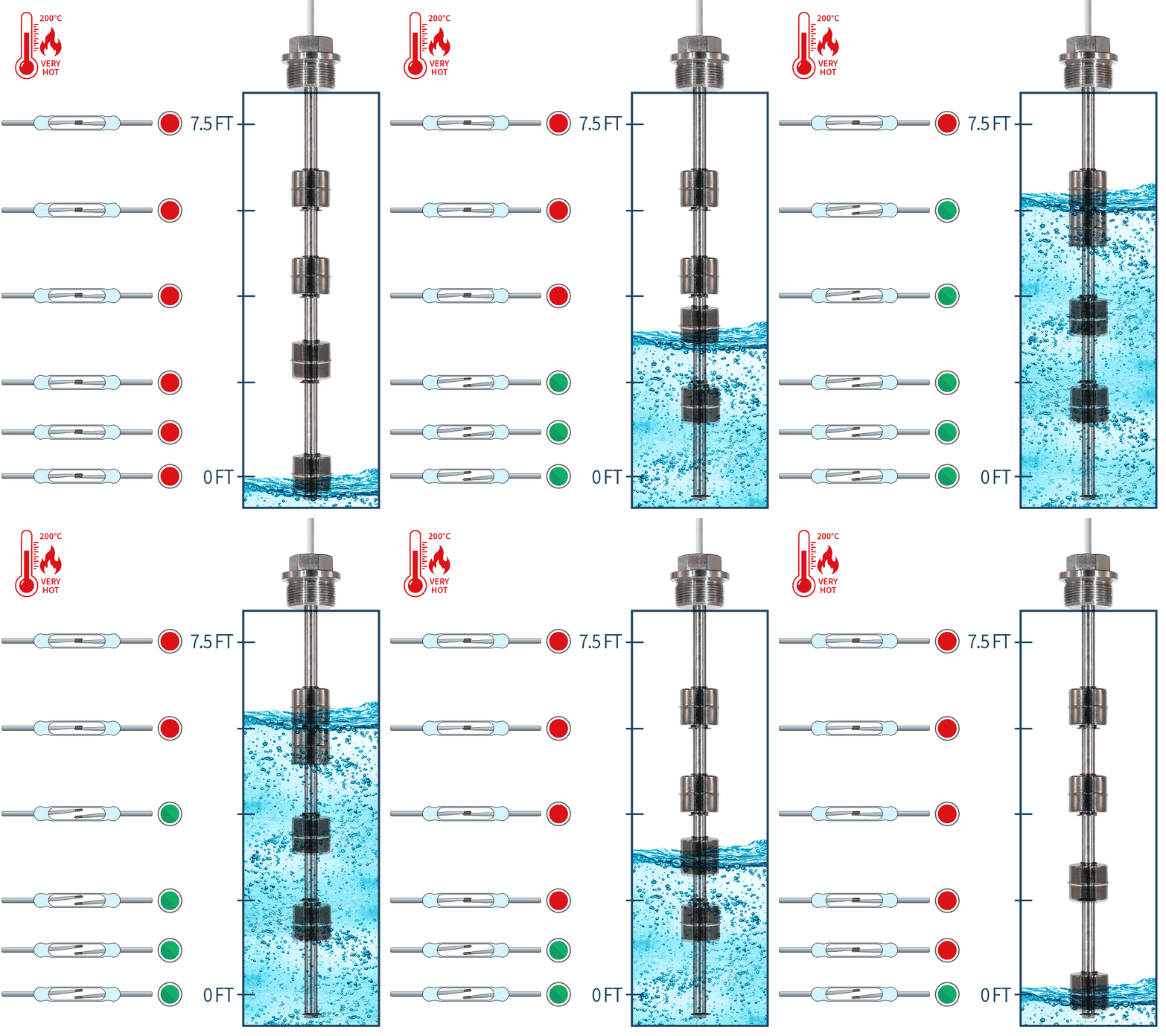
Case Study: Reliable Fluid Monitoring in Extreme Environments
Faced with extreme temperatures, diverse fluid characteristics, and demanding operating conditions, Standex Detect engineered a multi-point fluid-level sensing solution that delivered reliable performance where standard sensors may fall short.
Download the case study to learn how Standex Detect delivered reliable fluid-level sensing from-40°C to 180°C in a demanding automotive application.
Fluid Level Sensing in Harsh Media and Contaminated Environments
Fluid-level sensing applications frequently expose sensors to:
Applications include:
- Coolants
- Oils
- Water
- Process fluids
- Dust and contamination
The sensing technology, packaging, and installation method must all be evaluated against the actual operating environment.
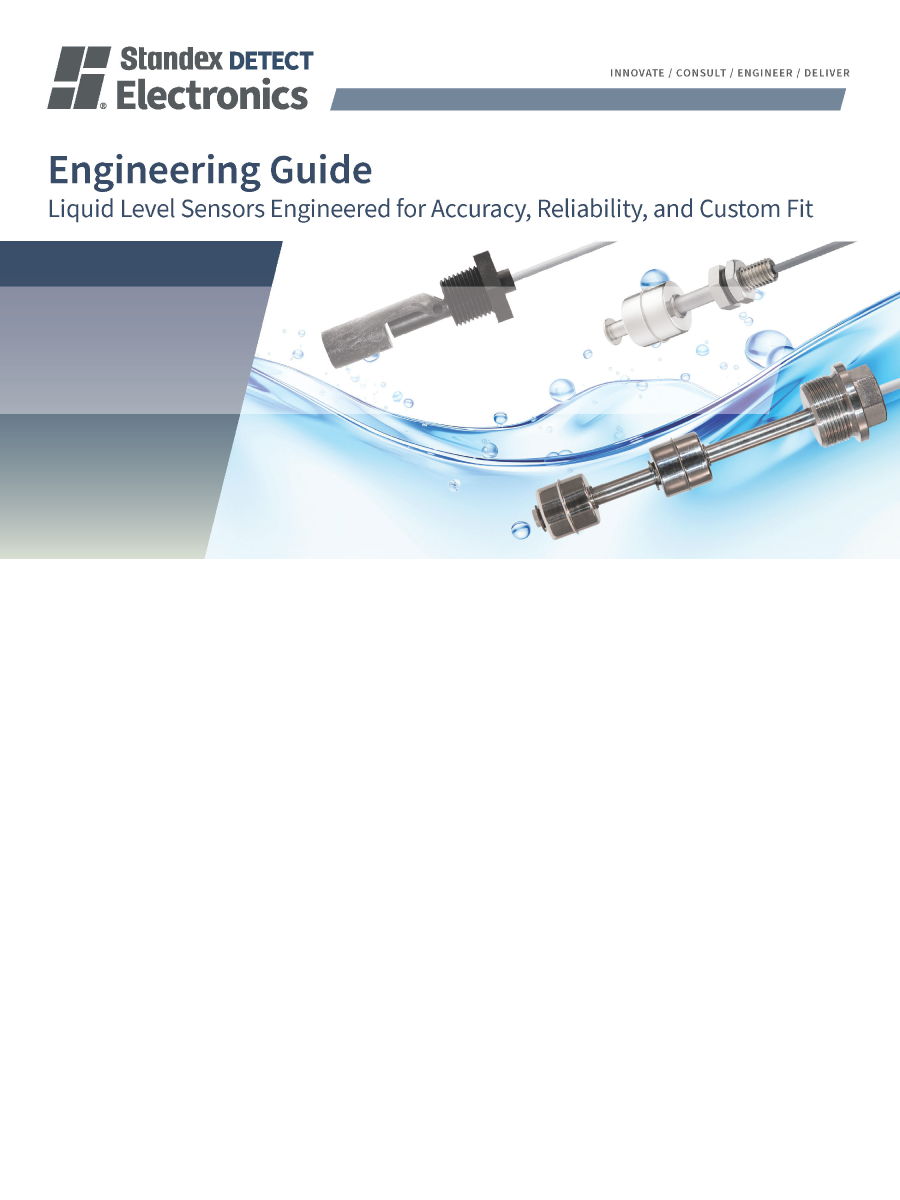
Engineering Guide: Liquid Level Sensors & Floats
Learn how engineers optimize fluid-level sensing solutions for demanding applications.
Vibration-Resistant Sensors for Shock and High-Cycle Applications
Construction equipment, agricultural machinery, transportation systems, and industrial automation applications all place significant mechanical stress on sensing technologies.
Sensors must maintain reliable operation despite:
- Shock
- Continuous vibration
- Repeated cycling
- Outdoor exposure
A sensing solution that performs well in a laboratory may not survive in the field.
Customer Example
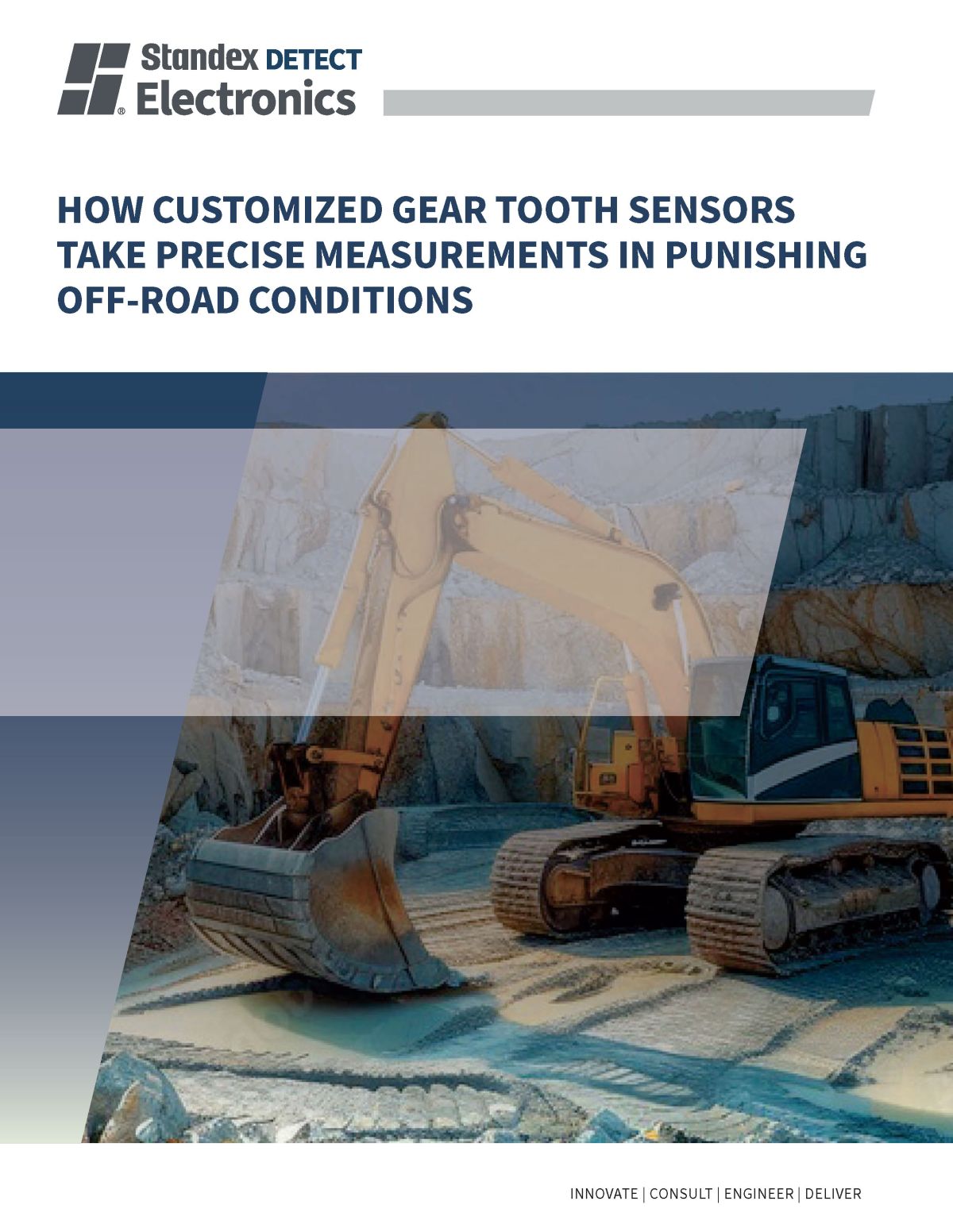
Heavy off-road vehicle manufacturers rely on engineered vibration-resistant sensors capable of maintaining performance under continuous vibration and harsh operating conditions.
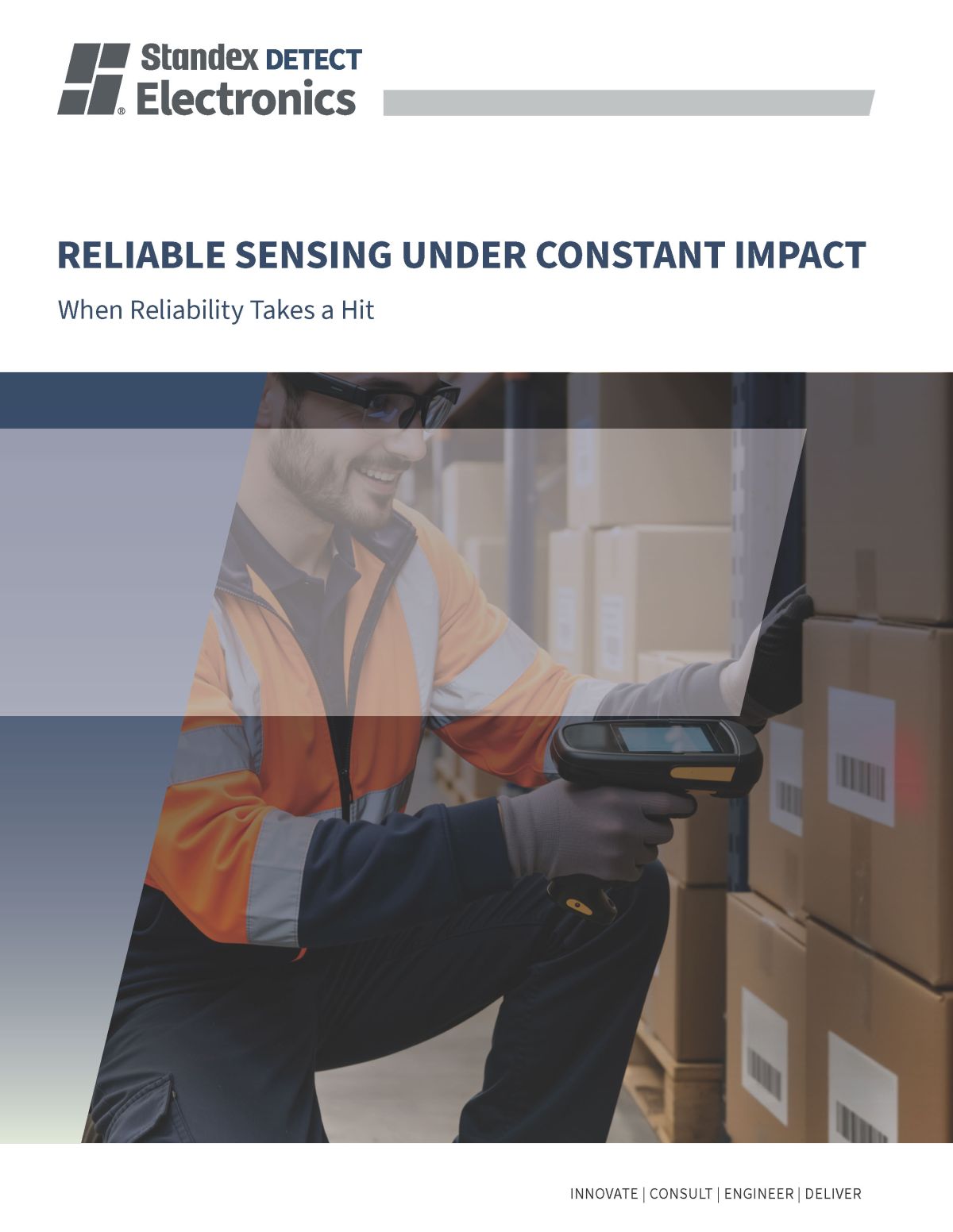
Harsh Environment Sensors IP67, IP69 Ratings
Repeated shock, vibration, and abuse caused competing sensing technologies to fail, while the Standex solution continued performing reliably.
Case Study: Reliable Sensing Under Constant Impact
Learn how Standex Detect delivered reliable sensing performance in a high-shock, high-vibration application where competing technologies struggled to maintain accuracy and reliability.
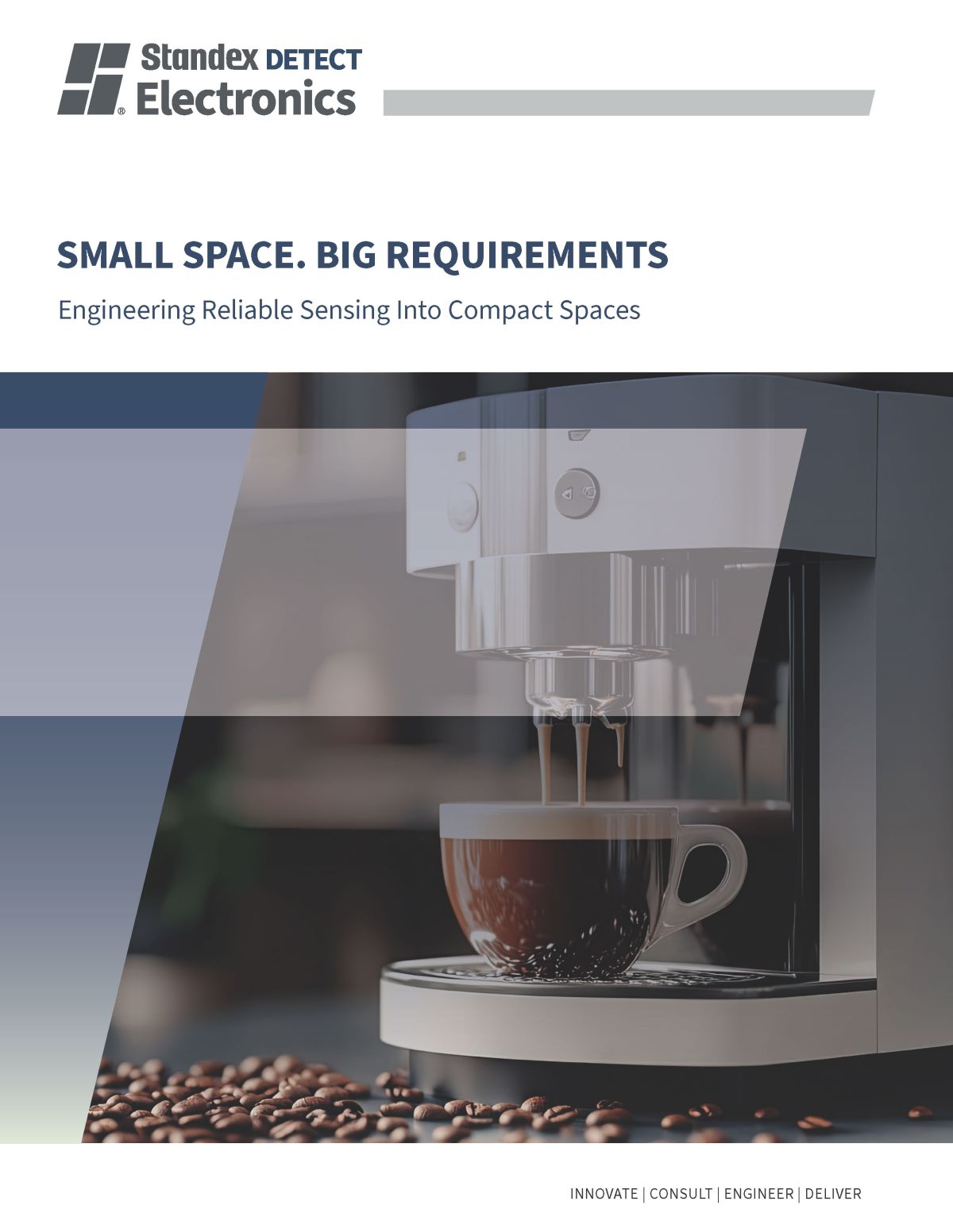
Sensor Solutions for Space-Constrained Designs
A manufacturer of premium coffee and espresso machines needed a reliable method for detecting water levels and monitoring the position of removable components such as water reservoirs.
Space constraints, fluid exposure, and varying installation requirements made standard sensing approaches difficult to implement without affecting overall product design.
Case Study: Small Space. Big Requirements.
Learn how Standex Detect developed an application-specific sensing solution that delivered reliable fluid-level and position detection while overcoming space constraints and demanding environmental requirements.
Key Takeaway
The problem isn’t finding a sensor.
The problem is finding a sensor that survives your actual environment.
Jump to: Introduction | The Hidden Cost of Using the Wrong Sensor | Real-World Challenges Require Application-Specific Solutions | Why Standard Sensors Fail | Engineered Sensing Solutions Designed to Meet Your Requirements | Why Choose Standex Detect? | FAQs | Partnering for Precision
Why Standard Sensors Fail in Harsh Operating Environments
Many applications begin with standard platforms.
But as operating conditions become more demanding, the optimal solution may require additional engineering.
The most successful sensing solutions begin with understanding the application requirements, not selecting a product from a catalog. Environmental conditions, installation constraints, lifecycle expectations, and performance goals all influence the optimal solution.
Standex Detect works with customers to evaluate:
 | Operating environment |
 | Installation constraints |
 | Sensor material compatibility |
 | Media exposure |
 | Vibration requirements |
 | Lifecycle expectations |
 | Packaging limitations |
 | Sensing distance requirements |

Jump to: Introduction | The Hidden Cost of Using the Wrong Sensor | Real-World Challenges Require Application-Specific Solutions | Why Standard Sensors Fail | Engineered Sensing Solutions Designed to Meet Your Requirements | Why Choose Standex Detect? | FAQs | Partnering for Precision
Engineered Sensing Solutions Designed to Meet Your Requirements
Not every application fits a standard product. Many demanding environments require application-specific solutions designed to fit customer requirements without sacrificing performance.
Because Standex Detect designs and manufactures reed switches, sensors, and magnetic actuation systems, engineers can evaluate sensing solutions against real operating requirements, not just datasheet specifications.
By understanding your requirements first, Standex Detect can evaluate standard platforms, modified designs, or fully custom solutions to determine the best fit for the application
The Result
Rather than forcing an application to fit a catalog sensor, Standex helps develop solutions optimized for the realities of the operating environment.
Jump to: Introduction | The Hidden Cost of Using the Wrong Sensor | Real-World Challenges Require Application-Specific Solutions | Why Standard Sensors Fail | Engineered Sensing Solutions Designed to Meet Your Requirements | Why Choose Standex Detect? | FAQs | Partnering for Precision
Why Choose Standex Detect for Custom-Designed Sensor Solutions?
Successful sensing solutions require more than component selection.
They require an understanding of the operating environment, system requirements, and long-term performance expectations.
End-to-End Engineering
From reed switch fabrication through finished sensor assembly, Standex designs, manufactures, tests, and qualifies sensing solutions entirely in-house.
Custom Engineering
When standard sensors aren’t enough, Standex Detect develops application-specific sensing solutions designed to meet your requirements. From activation distance and packaging to environmental protection and lifecycle expectations, our engineering teams work directly with customers to develop solutions designed to fit their needs without sacrificing performance.
Global Scale
Engineering and manufacturing operations across North America, Europe, and Asia support projects from prototype through production.
Co-Engineering Partnership
Standex works directly with engineering teams to reduce design risk, improve sensing performance, and accelerate time to market.
Jump to: Introduction | The Hidden Cost of Using the Wrong Sensor | Real-World Challenges Require Application-Specific Solutions | Why Standard Sensors Fail | Engineered Sensing Solutions Designed to Meet Your Requirements | Why Choose Standex Detect? | FAQs | Partnering for Precision

Frequently Asked Questions About Custom Sensor Solutions
Selecting the right sensor for a demanding application often requires balancing environmental challenges, performance requirements, installation constraints, and long-term reliability expectations. The following FAQs address common questions engineers face when evaluating sensing solutions for harsh operating conditions and applications where standard products may not be enough.
Click a question below to explore detailed answers.
What causes sensors to fail in harsh environments?
Temperature extremes, vibration, contamination, moisture exposure, fluid interaction, and mechanical stress can all impact sensing performance and reliability.
When should a custom sensor solution be considered?
Custom engineering may be beneficial when standard products cannot meet installation, environmental, lifecycle, or performance requirements.
What applications commonly require engineered sensing solutions?
Industrial automation, EV systems, agriculture, construction equipment, renewable energy systems, fluid monitoring, and transportation applications often require specialized sensing designs.
Can Standex customize existing sensor platforms?
Yes. Many projects begin with standard products and are modified to meet application-specific sensing, packaging, environmental, or lifecycle requirements.
How do temperature extremes affect sensor performance?
Extreme temperatures can influence activation points, material performance, response characteristics, and long-term reliability. Selecting a sensing solution designed for the operating environment helps ensure consistent performance throughout the product lifecycle.
What should engineers consider when selecting sensors for fluid-level applications?
Important considerations include fluid type, contamination levels, operating temperatures, mounting requirements, chemical compatibility, switching requirements, and expected service life. The fluid itself is often one of the most important variables in sensor selection.
How can vibration impact sensing performance?
Continuous vibration and shock can affect sensor mounting, mechanical stability, and long-term reliability. Applications such as construction equipment, agricultural machinery, transportation systems, and industrial automation often require sensing solutions specifically designed for these conditions.
What challenges do space-constrained applications create?
As products become smaller and more complex, engineers must integrate additional sensing functionality into increasingly limited spaces. Compact sensor designs, customized packaging, and optimized mounting approaches can help overcome these limitations.
Are reed sensors suitable for harsh environments?
Yes. Reed sensors are commonly used in demanding environments because of their hermetically sealed construction, long operating life, low power requirements, and resistance to dust, moisture, and contamination. We also offer other solid-state sensing options for custom sensor solutions.
How does Standex design sensors to meet IP67 and IP69 ratings?
Standex designs their sensors to ensure epoxy material is thick enough to create a barrier to secure the sensing element while also protecting from both dust and liquid ingression. In extreme environments Standex can design over molding to create a more impenetrable seal to liquid and dust ingression.
How do engineers determine whether a standard or custom sensor is the best fit?
The decision typically depends on operating conditions, environmental exposure, lifecycle requirements, packaging constraints, activation distance requirements, and overall system performance goals. If a standard sensor cannot satisfy one or more critical requirements, a customized solution may provide a more reliable long-term outcome.
Can Standex help validate sensor performance before deployment?
Yes. Standex works with customers throughout the development process to evaluate application requirements, recommend appropriate sensing technologies, and support testing and validation to help ensure long-term performance and reliability. Standex has in-house testing capabilities and relationships with trusted 3rd party labs.
What industries benefit most from custom-engineered sensing solutions?
Applications in industrial automation, electric vehicles, agriculture, construction equipment, renewable energy, transportation infrastructure, medical devices, and fluid monitoring systems frequently benefit from customized sensing solutions due to their demanding operating environments.
What are the most common signs that a sensor is not suited for an application?
Common indicators include:
- Specification did not meet application requirements
- Premature failure
- False triggering
- Missed detections
- Excessive maintenance
- Degraded performance in extreme temperatures
- Issues caused by contamination, vibration, or limited installation space
These symptoms often indicate a mismatch between the sensor design and the real-world operating environment.
Jump to: Introduction | The Hidden Cost of Using the Wrong Sensor | Real-World Challenges Require Application-Specific Sensor Solutions | Why Standard Sensors Fail | Engineered Sensing Solutions Designed to Meet Your Requirements | Why Choose Standex Detect? | FAQs | Partnering for Precision

Partnering for Precision: Custom Sensor Solutions Designed to Fit Your Needs
What You Gain:
- Application-specific engineering support
- Standard and custom-designed sensing solutions
- Expertise across industrial, EV, agriculture, construction, and energy markets
- Solutions designed to fit your needs without sacrificing performance
- Global manufacturing and supply-chain stability
Talk to Us About Your Application
Whether you’re dealing with temperature extremes, contamination, vibration, fluid exposure, or integration constraints, Standex Detect can help develop a solution based on your specific application requirements.
For When it Matters – The Right Design, at the Right Time, at the Optimal Cost.
Related Articles
-
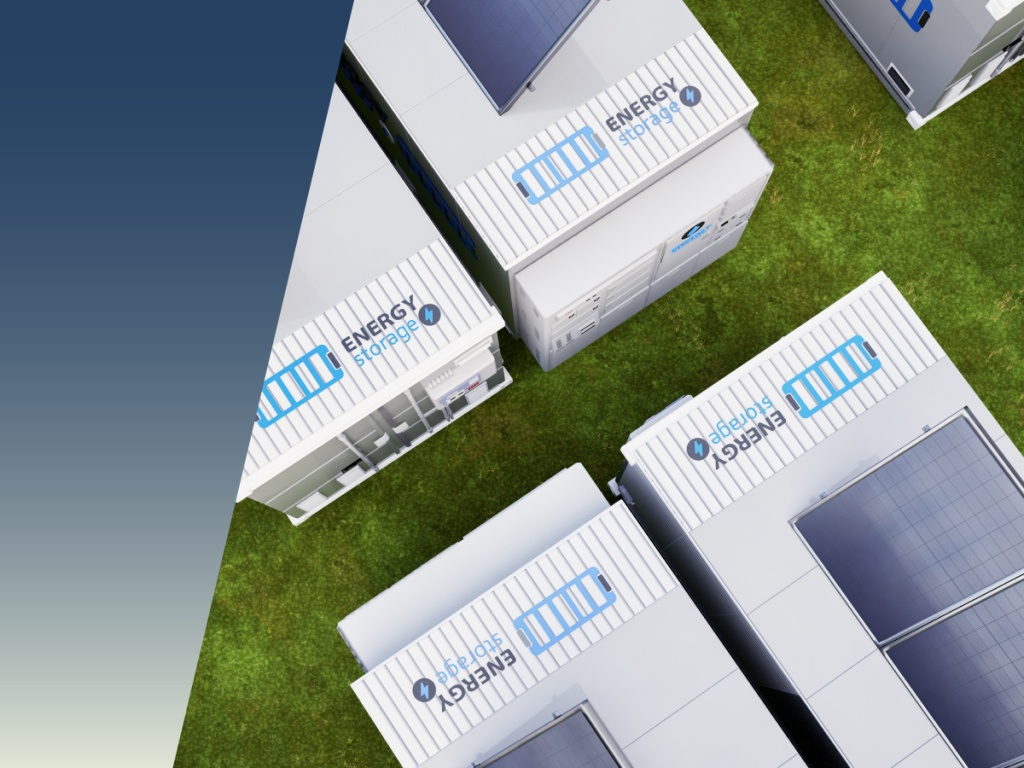
High-Voltage Insulation Monitoring for Next-Generation BESS
Learn how insulation monitoring helps improve safety, reliability, uptime, and asset protection in Battery Energy Storage Systems (BESS). Explore high-voltage monitoring solutions for 1,000–1,500 VDC energy storage applications.
-
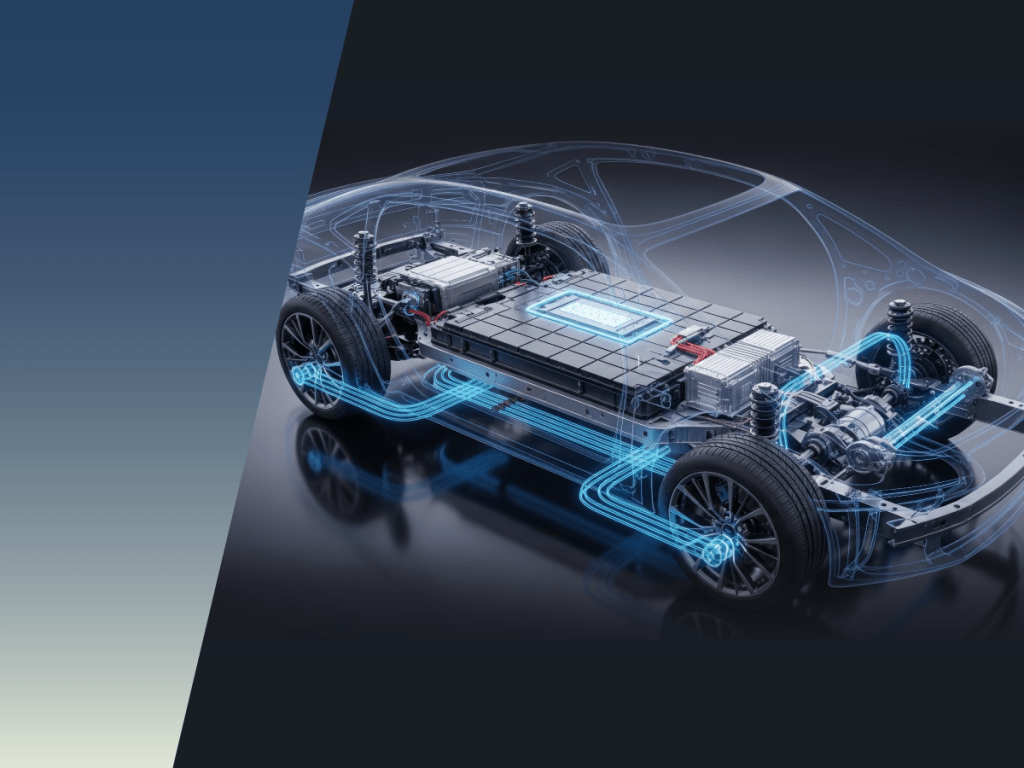
Reliable Sensing for Safer, More Efficient EV Systems
Learn how reliable sensing supports safer, more efficient EV systems. Explore applications in battery management, charging systems, fluid monitoring, and safety detection and discover how advanced sensing technologies help improve performance, reliability, and operational safety.
-
Designing High-Density Switching Architectures Without Sacrificing Precision
Learn how engineers can increase channel density while managing capacitance, crosstalk, and PCB design constraints in modern semiconductor test systems.
-
Eliminating Downtime in Motion Systems with Precision Sensing
Learn how precision sensing helps eliminate downtime in industrial motion systems. Explore real‑world applications in automation, high‑power loads, and fluid‑dependent systems and see how reliable sensing improves uptime and system performance.