
Learn how insulation monitoring helps improve safety, reliability, uptime, and asset protection in Battery Energy Storage Systems (BESS). Explore high-voltage monitoring solutions for 1,000–1,500 VDC energy storage applications.
If there are particular areas you need help with, feel free to skip to any of the following sections:
High-Isolation Reed Relays for Battery Insulation Monitoring
As Battery Energy Storage Systems (BESS) continue moving toward higher-voltage architectures, accurate insulation monitoring plays an increasingly important role in maintaining system safety, reliability, and uptime. Monitoring insulation resistance between the energized DC system and protective earth helps operators detect potential electrical faults, protect critical assets, and support safe operation of high-voltage energy storage installations.
Standex Detect reed relays are well suited for insulation monitoring circuits. High insulation resistance and low leakage help preserve measurement accuracy, while high dielectric strength and low contact resistance support reliable high-voltage switching.
The application is particularly relevant in Commercial & Industrial and Utility-Scale BESS, where system voltages can reach 1,000 to 1,500 VDC and reliable insulation monitoring becomes increasingly important as system size, voltage, and asset value increase.
Primary Applications
- Battery Management System (BMS) insulation monitoring
- Insulation Monitoring Device (IMD) switching
- PCS insulation monitoring and high-voltage measurement
- Auxiliary high-voltage monitoring circuits
Download the ESS Application Guide
Insulation Monitoring Isn’t Just a Compliance Requirement
It helps operators:
- Improve safety
- Support earlier fault detection and help reduce the risk of unexpected shutdowns
- Protect high-value battery assets
- Support reliable operation
- Support monitoring requirements in higher-voltage BESS architectures
Jump to: Introduction | Where Reed Relays Fit in Energy Storage | Why Insulation Monitoring Matters | Beyond Compliance | The Relay’s Role in Overall BESS System Performance | Reed Relay Properties | Recommended Relays | From Measurement Accuracy to System Reliability | Why Standex Detect | High-Voltage Trend | Precision Partner
Where Reed Relays Fit in Energy Storage
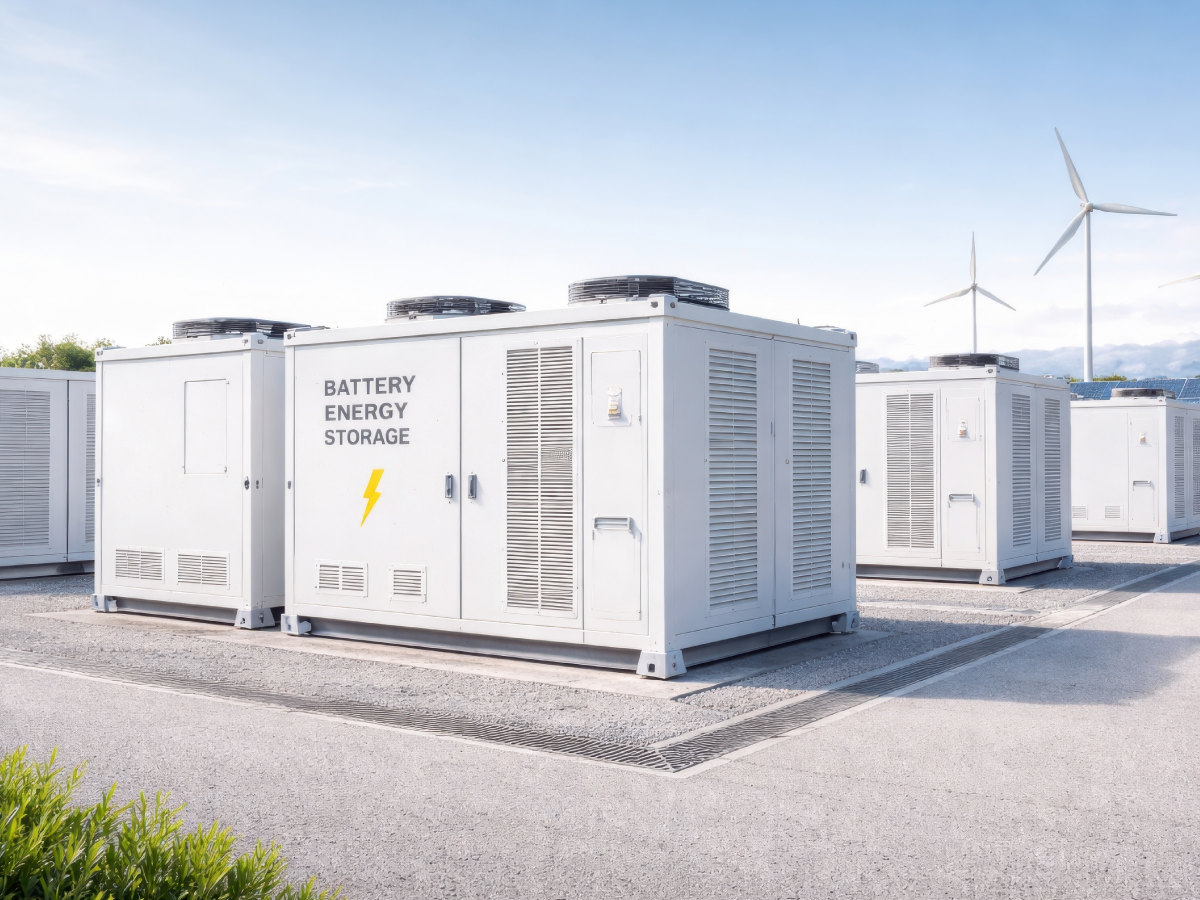
Energy Storage Systems include a broad range of technologies. This page focuses on Battery Energy Storage Systems (BESS), where Standex Detect relay technology is used in high-voltage monitoring and measurement circuits.
Residential systems remain part of the ESS landscape, but the strongest relay relevance is in larger installations operating at higher DC voltages.
Commercial & Industrial BESS
C&I BESS covers a broad range of system voltages, with higher-power architectures reaching 1,000 VDC and, in some designs, 1,500 VDC.
These voltage levels increase the requirements placed on components used to measure insulation resistance, route high-voltage diagnostic signals, and separate measurement electronics from the energized DC system.
Utility-Scale BESS
Utility-scale battery systems commonly operate at 1,500 VDC on the DC side.
Higher-voltage architectures are also being investigated, but their adoption will depend on standards, system design, and component availability. Today, 1,500 VDC remains the more relevant reference point for utility-scale BESS.
Residential BESS
Residential storage remains part of the overall ESS market, but it is not the main technical focus of the relay applications described here because operating voltages and relay requirements are generally lower.
Jump to: Introduction | Where Reed Relays Fit in Energy Storage | Why Insulation Monitoring Matters | Beyond Compliance | The Relay’s Role in Overall BESS System Performance | Reed Relay Properties | Recommended Relays | From Measurement Accuracy to System Reliability | Why Standex Detect | High-Voltage Trend | Precision Partner
Why Insulation Monitoring Matters
A high-voltage battery system must maintain adequate electrical isolation from protective earth and accessible conductive parts.
Insulation resistance can deteriorate because of wiring faults, contamination, moisture, component degradation, or damage elsewhere in the high-voltage system. A dedicated Insulation Monitoring Device (IMD), or an insulation-monitoring function integrated within the BMS or PCS architecture, can use controlled measurement paths to determine whether insulation resistance remains above the required threshold.
Reed relays can be used to connect and disconnect these measurement paths.
Learn how to design with high-voltage reed relays
Why the Relay Matters to the Measurement
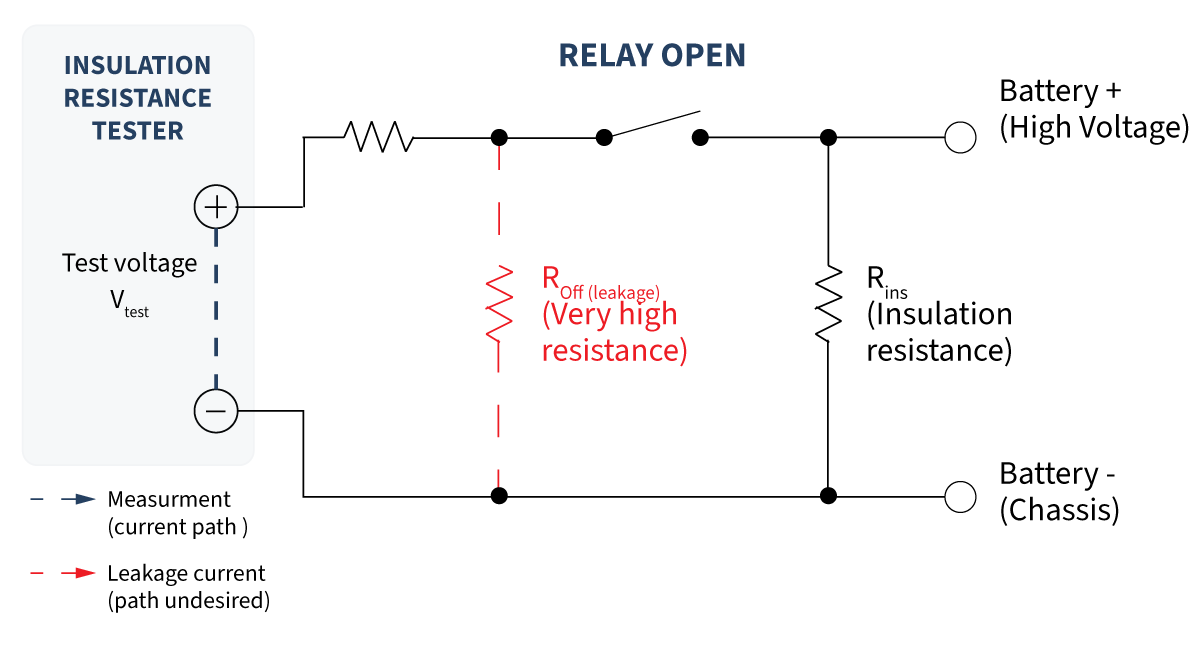
Relay Open (Off)
Open Path: Very High Off-State Resistance
When the relay is open, the measurement path is disconnected. In practice, the relay still has finite off-state resistance, so a very small leakage current remains. This leakage creates a parallel path to the insulation resistance being measured and can influence measurement accuracy.
Reed Relays provide accurate measurement results thanks to their low leakage current in pA range.
Relay Closed (On)
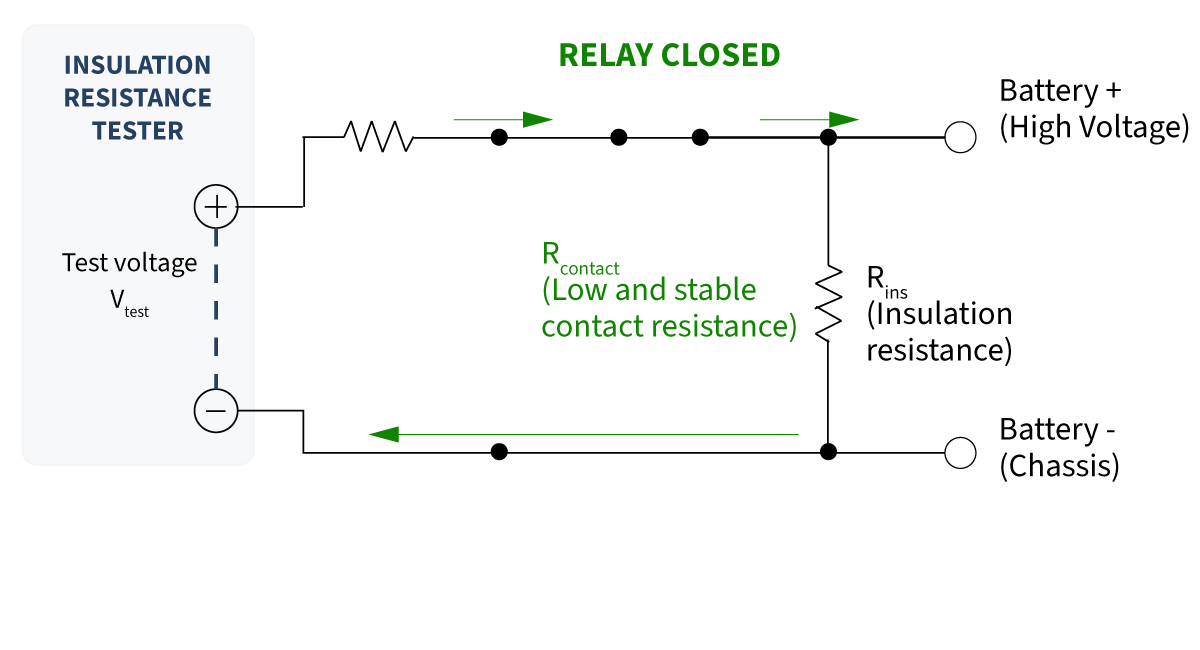
Measurement current passes through the contact
When the relay closes, the measurement current passes through the contact. Low and stable contact resistance helps keep the relay’s contribution to the closed measurement path small.
Why it Matters
High insulation resistance reduces leakage through the open relay and limits its influence on the insulation-resistance measurement.
The Relay’s Role
This combination of high resistance when open and low contact resistance when closed is an important relay’s role in the insulation resistance measurement.


Roff (leakage): off-state resistance of the relay (very high resistance and isolation)
Rcontact: on-state resistance of the relay (low and stable)
Riso: insulation resistance between the energized HV DC system and protective earth (PE) (what is being measured)
Jump to: Introduction | Where Reed Relays Fit in Energy Storage | Why Insulation Monitoring Matters | Beyond Compliance | The Relay’s Role in Overall BESS System Performance | Reed Relay Properties | Recommended Relays | From Measurement Accuracy to System Reliability | Why Standex Detect | High-Voltage Trend | Precision Partner
Beyond Compliance: Why Insulation Monitoring Matters to BESS Operators
Insulation monitoring is more than a safety requirement. It helps operators maintain reliable system performance across the entire energy storage installation.
Safety
Insulation monitoring helps identify degradation, contamination, moisture intrusion, and electrical faults before they become larger system risks, supporting safer operation of high-voltage battery systems.
Uptime
Early detection of insulation issues can reduce unexpected interruptions and support higher system availability throughout the lifecycle of the installation.
Reliability
Accurate monitoring helps ensure critical battery, inverter, and power-conversion systems continue operating as intended by providing confidence in the health of the high-voltage electrical system.
Scalability
As BESS architectures move toward higher DC voltages, accurate insulation monitoring becomes increasingly important.
Jump to: Introduction | Where Reed Relays Fit in Energy Storage | Why Insulation Monitoring Matters | Beyond Compliance | The Relay’s Role in Overall BESS System Performance | Reed Relay Properties | Recommended Relays | From Measurement Accuracy to System Reliability | Why Standex Detect | High-Voltage Trend | Precision Partner
The Relay’s Role in Overall BESS System Performance
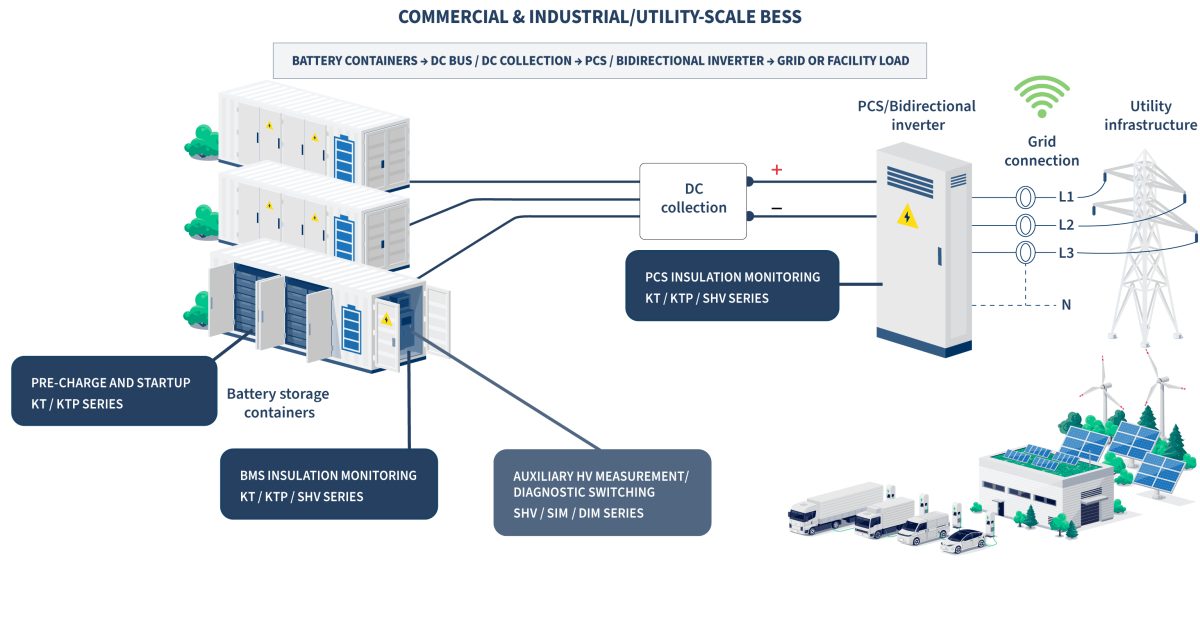
Battery Containers → DC BUS / DC Collection → PCS / Bidirectional Inverter → Grid or Facility Load
Standex reed relays are used in monitoring, measurement, and selected control circuits around the main power path, not as the primary battery disconnect. Their role is helping insulation-monitoring systems deliver the accurate measurements needed to support safety, reliability, uptime, and long-term asset protection throughout the installation.
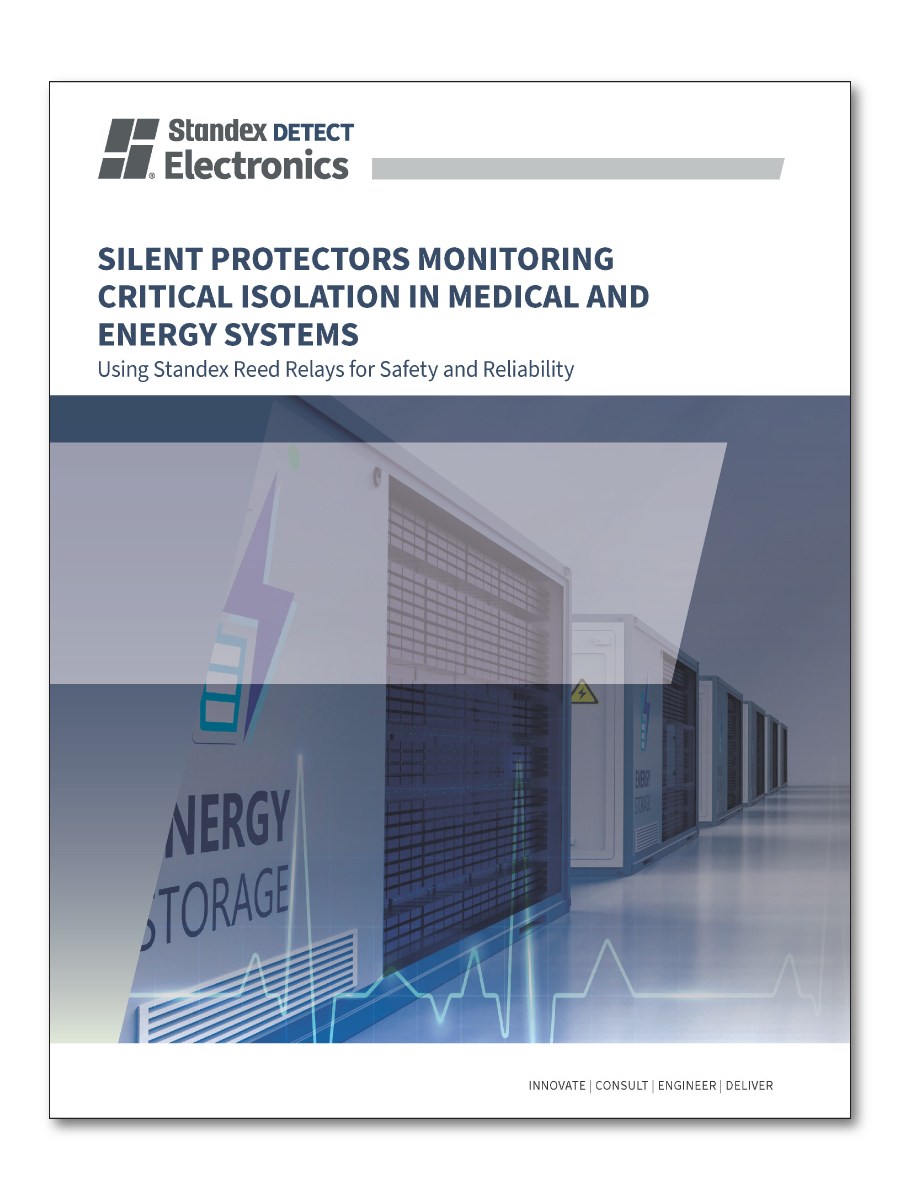
BMS / Insulation Monitoring
A relay switches the measurement path between the high-voltage system and the insulation-monitoring circuit.
Relevant Products: KT/KTP
- Very high insulation resistance limits leakage through the open relay while the monitoring circuit evaluates resistance to ground.
Read the Blog: Monitoring Insulation in Energy Storage Systems
PCS Insulation Monitoring / HV Measurement
The PCS connects the battery DC bus to the AC system. Depending on the architecture, insulation monitoring or other high-voltage measurements may also be implemented on the PCS side.
Reed relays can switch these measurement paths while providing high off-state isolation when the path is not selected.
Relevant Products: KT/KTP/SHV
- Product selection depends on the actual switched voltage, dielectric requirement, and load.
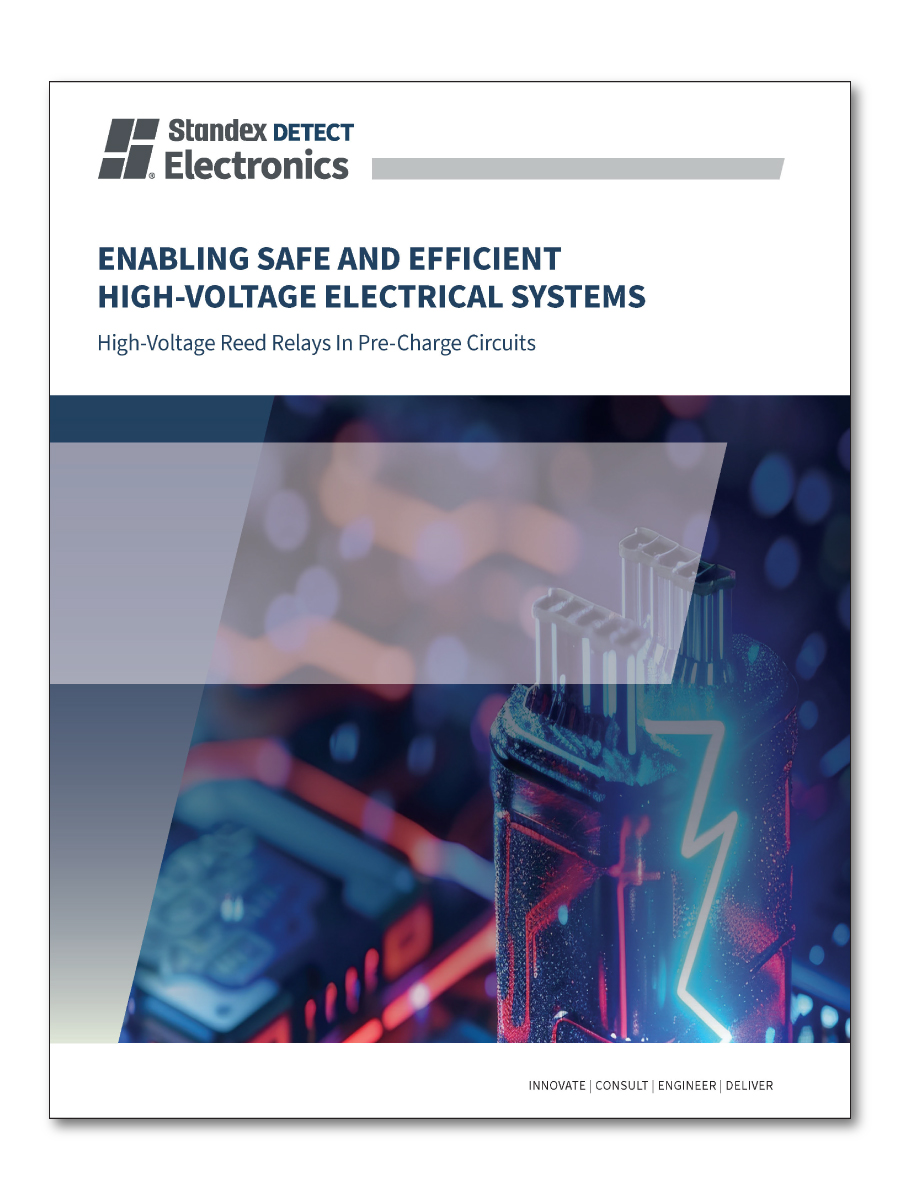
Pre-Charge Control in Controlled High-Voltage Startup
In many high-voltage BESS architectures, the battery is connected to the PCS or inverter through contactors. Before the main power path closes, a pre-charge circuit limits inrush while the DC-link capacitors charge through a resistor. A suitable Standex high-voltage reed relay can switch the temporary pre-charge branch where the circuit voltage, current, switching energy, and operating conditions remain within its ratings. Once the DC-link voltage approaches the battery voltage, the main contactor closes and normal operation begins.
Relevant products: KT / KTP
- The reed relay does not replace the main BESS power contactor. Its suitability for the pre-charge path depends on the actual resistor, capacitance, voltage, current, switching energy, and operating sequence.
Read the Blog: High-Voltage Reed Relays in Pre-Charge Circuits
Jump to: Introduction | Where Reed Relays Fit in Energy Storage | Why Insulation Monitoring Matters | Beyond Compliance | The Relay’s Role in Overall BESS System Performance | Reed Relay Properties | Recommended Relays | From Measurement Accuracy to System Reliability | Why Standex Detect | High-Voltage Trend | Precision Partner
Reed Relay Properties That Matter in BESS
High Insulation Resistance
- An insulation-monitoring circuit is intentionally measuring a very high-resistance path. The switching element must therefore contribute as little parallel leakage as practical.
- The KT and KTP series are specified with minimum insulation resistance of 10¹³ Ω.
Dielectric Strength
- When the relay is open, its contacts can be exposed to a substantial potential difference.
- The required breakdown capability depends on circuit topology, working voltage, and the applicable insulation-coordination requirements.
- Switching voltage and open-contact dielectric withstand are different specifications and must be considered separately when selecting the relay.
Galvanic Separation Between Control and Measurement Circuits
- A reed relay uses a magnetic field generated by the coil to actuate the reed switch. There is no conductive connection between the coil drive and the switched contact circuit.
- This allows a low-voltage control circuit to operate a high-voltage measurement path while maintaining electrical separation between the two circuits.
Low Leakage at Very Low Measurement Current
- Insulation-monitoring circuits do not require the relay to carry the main BESS load current.
- Instead, the relay switches a measurement path where unwanted leakage can be more important than current-carrying capability.
- This is one of the reasons reed technology is well suited to this application.
Jump to: Introduction | Where Reed Relays Fit in Energy Storage | Why Insulation Monitoring Matters | Beyond Compliance | The Relay’s Role in Overall BESS System Performance | Reed Relay Properties | Recommended Relays | From Measurement Accuracy to System Reliability | Why Standex Detect | High-Voltage Trend | Precision Partner
Recommended Relay Platforms
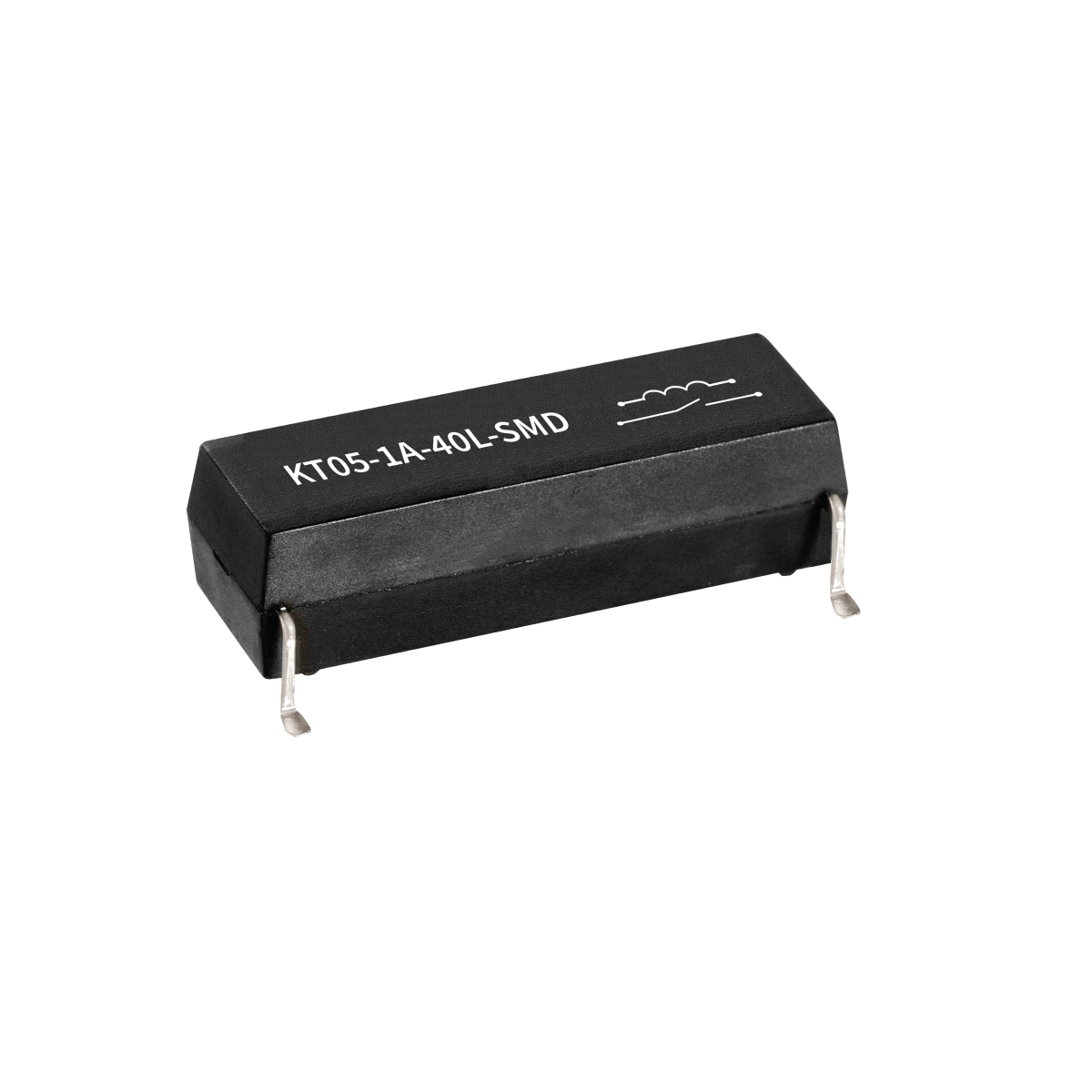
Main Platform for BESS Insulation Monitoring
The KT series is the established Standex platform for high-voltage insulation-monitoring applications.
Key specifications
- Switching voltage: up to 1,000 VDC
- Breakdown voltage: 4.5 kVDC minimum
- Coil-to-contact isolation: 7 kVDC
- Insulation resistance: 10¹³ Ω minimum
- Switching current: up to 1.0 A
- SMD and THT mounting
- AEC-Q200 tested
- UL Recognized
Typical application:
BMS and insulation-monitoring circuits where the relay must combine high-voltage capability with very low off-state leakage.
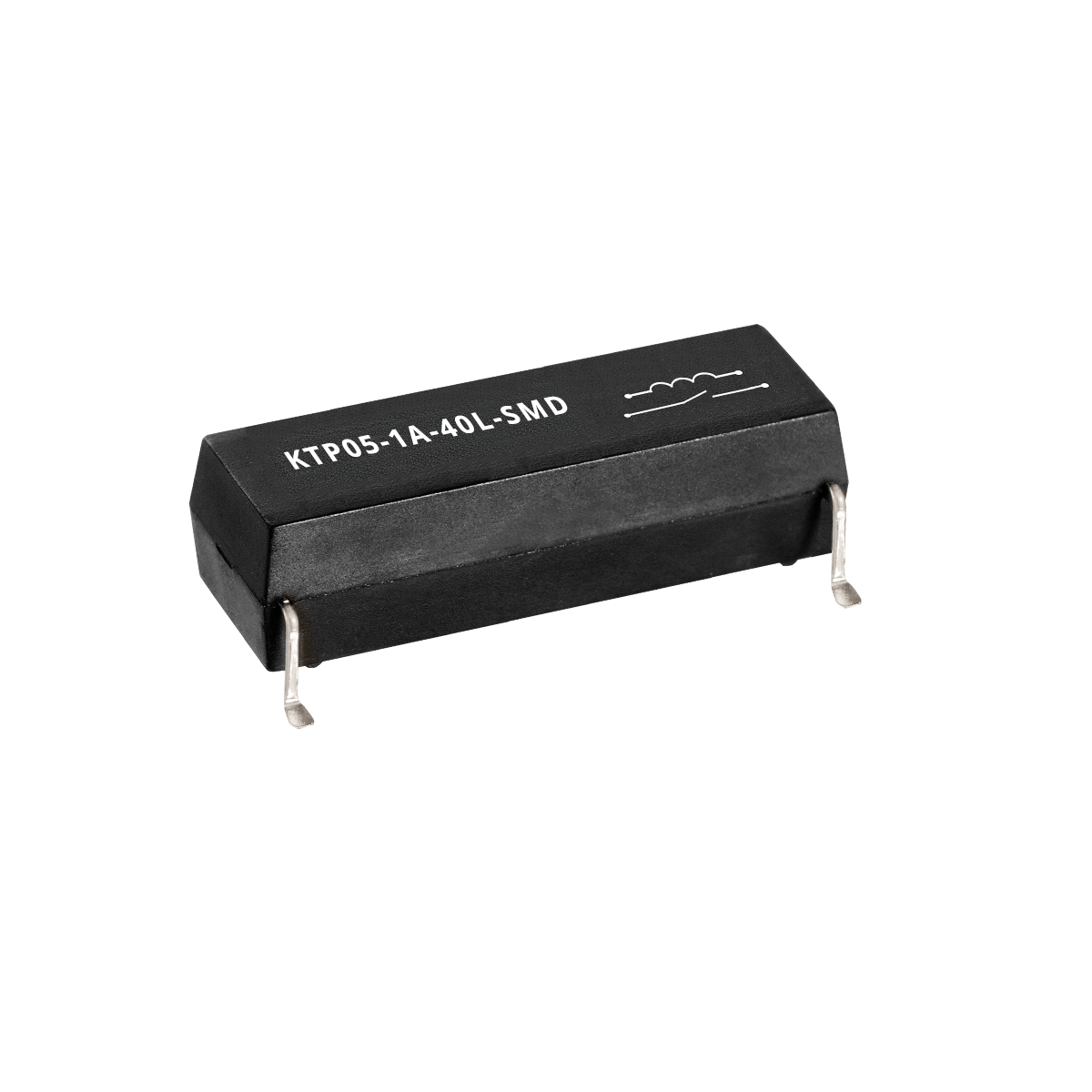
Higher-Voltage Extension of KT
KTP extends the KT platform for circuits requiring greater switching-voltage capability.
Key specifications
- Switching voltage: up to 2,500 VDC
- Breakdown voltage: 6 kVDC minimum
- Coil-to-contact isolation: 7 kVDC
- Insulation resistance: 10¹³ Ω minimum
- Switching current: up to 1.5 A
- SMD and THT mounting
Status: NEW / Samples Available / Pre-Launch
The 2.5 kVDC figure is the relay switching rating. It does not represent the typical nominal voltage of current BESS installations.
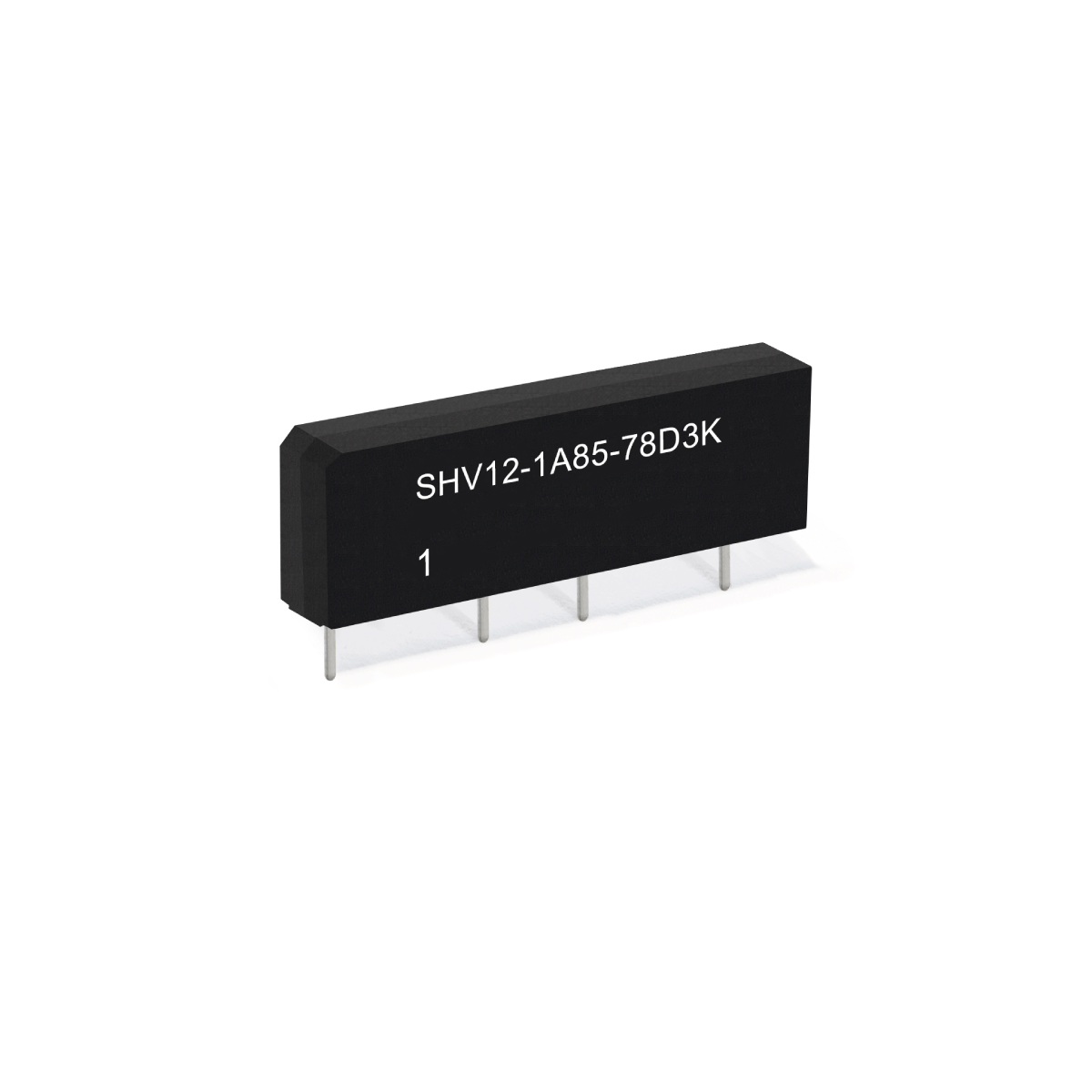
Higher-Voltage Diagnostic Switching
SHV can be used for high-voltage measurement and diagnostic paths where its electrical characteristics match the circuit requirements. KT and KTP remain the main products for the insulation-monitoring application.
Key specifications
- Switching voltage: up to 1,500 VDC
- Breakdown voltage: 5 kVDC minimum
- Insulation resistance: 10¹² Ω minimum
- Internal magnetic shield
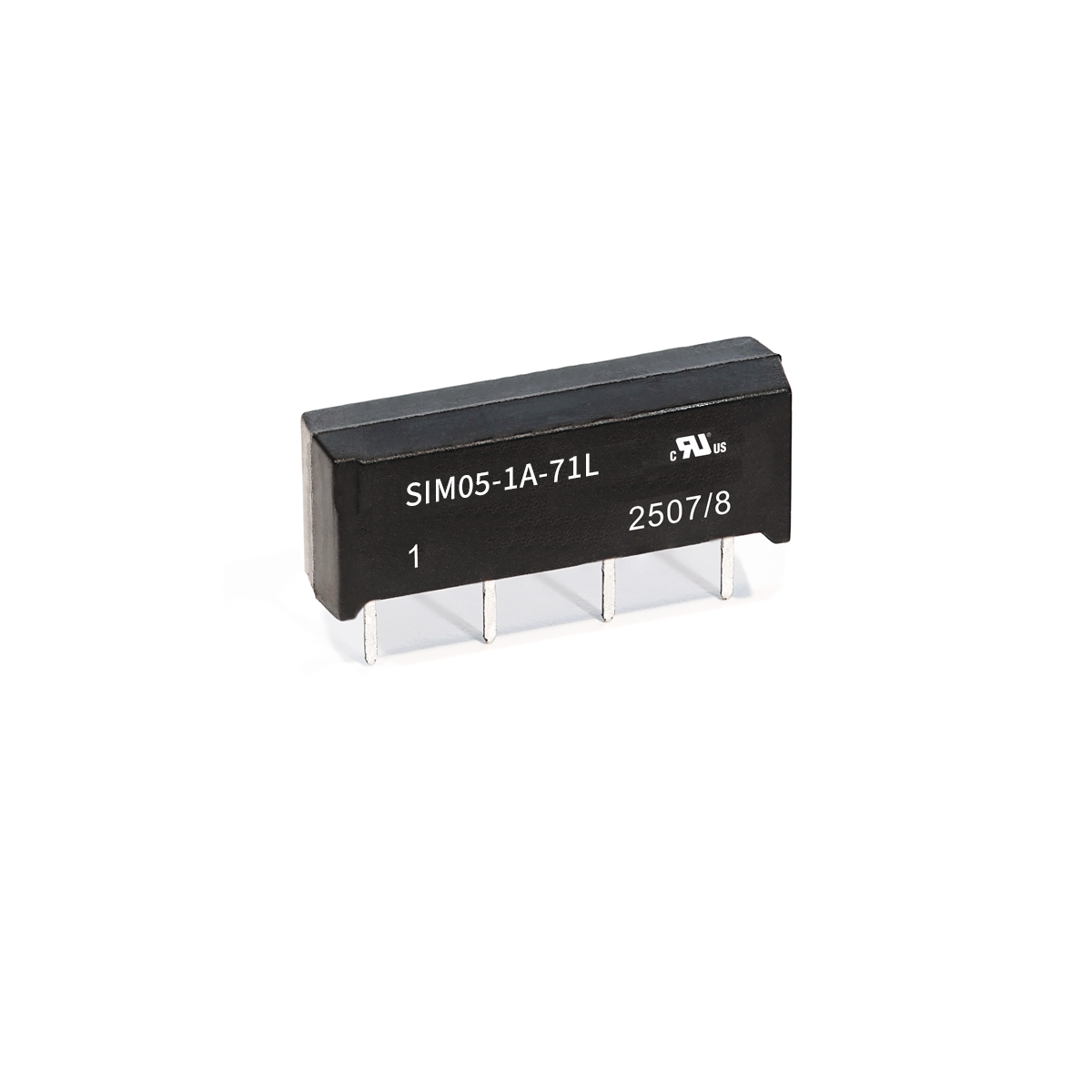
Auxiliary Measurement and Diagnostic Circuits
SIM provide compact switching options for lower-voltage measurement, control, and diagnostic circuits.
Key specifications
- Switching voltage: up to 500 VDC
- Breakdown voltage: 2 kVDC minimum
- Optional breakdown capability up to 3 kVDC
- Insulation resistance: 10¹² Ω minimum
Their role is in circuits where the actual switched voltage remains within the relay rating. They are not intended to switch a 1,000–1,500 V BESS DC bus directly
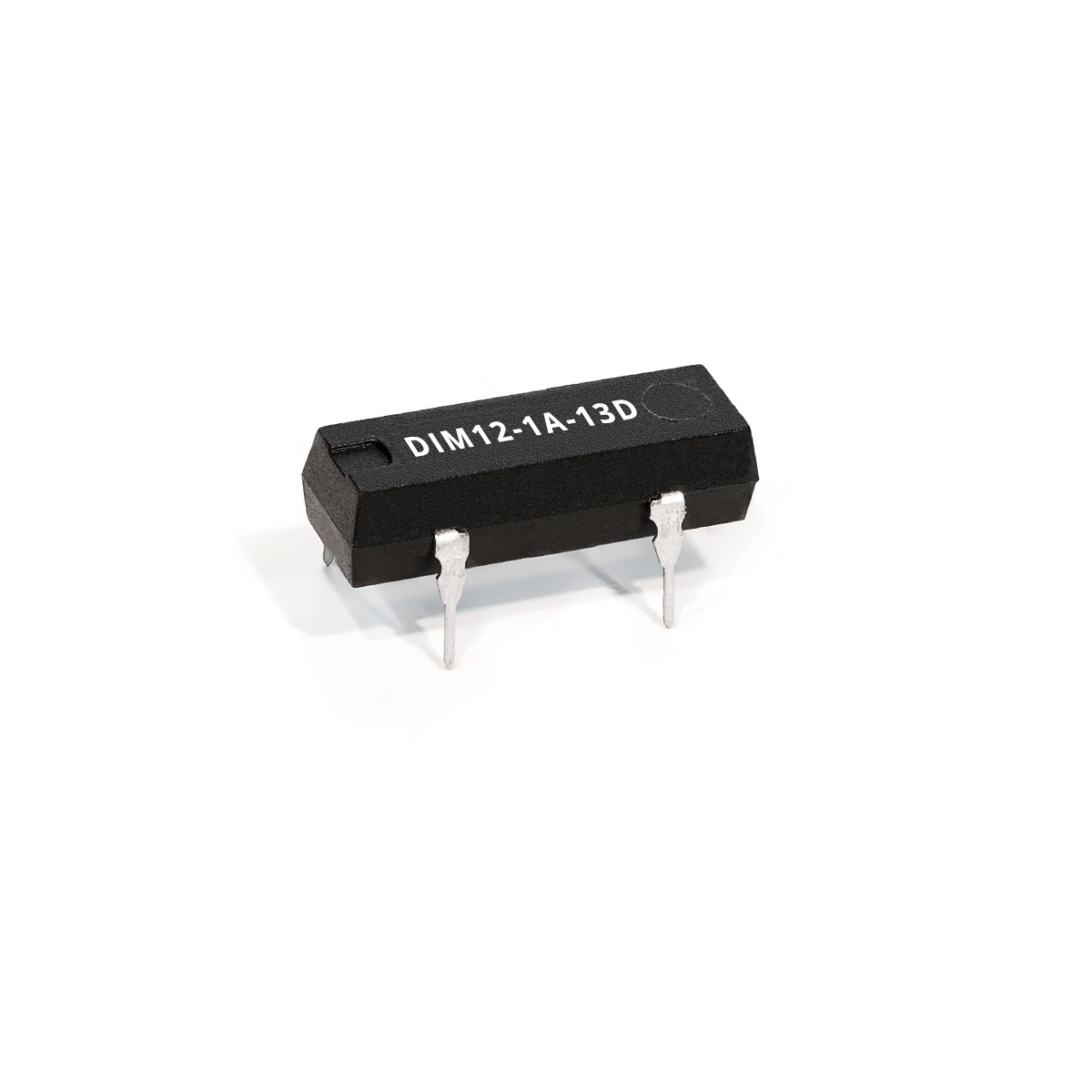
Auxiliary Measurement and Diagnostic Circuits
DIM provide compact switching options for lower-voltage measurement, control, and diagnostic circuits.
Key specifications
- Switching voltage: up to 500 VDC
- Breakdown voltage: 2 kVDC minimum
- Optional breakdown capability up to 3 kVDC
- Insulation resistance: 10¹² Ω minimum
Their role is in circuits where the actual switched voltage remains within the relay rating. They are not intended to switch a 1,000–1,500 V BESS DC bus directly
Jump to: Introduction | Where Reed Relays Fit in Energy Storage| Why Insulation Monitoring Matters | Beyond Compliance | The Relay’s Role in Overall BESS System Performance | Reed Relay Properties | Recommended Relays | From Measurement Accuracy to System Reliability | Why Standex Detect | High-Voltage Trend | Precision Partner
From Measurement Accuracy to System Reliability
Insulation monitoring is more than a compliance requirement.
Accurate monitoring helps operators:
- Detect insulation degradation earlier
- Supports earlier fault detection and can help reduce the risk of unexpected shutdowns
- Support safe operation of high-voltage battery systems
- Improve long-term system reliability
- Protect critical energy-storage assets
The relay’s role may be small within the overall architecture, but the measurement decisions it enables can have system-wide implications.
Jump to: Introduction | Where Reed Relays Fit in Energy Storage | Why Insulation Monitoring Matters | Beyond Compliance | The Relay’s Role in Overall BESS System Performance | Reed Relay Properties | Recommended Relays | From Measurement Accuracy to System Reliability | Why Standex Detect | High-Voltage Trend | Precision Partner
Relay Selection Is a Circuit Decision
A nominal BESS voltage is not enough information to select a relay.
The engineer should consider:
| Checklist | Selection Criteria |
|---|---|
 | maximum voltage actually appearing across the relay contacts |
| required open-contact dielectric strength |
| insulation resistance and acceptable leakage error |
| switched current and load type |
| capacitive or inductive energy |
| operating frequency and expected number of switching cycles |
| creepage and clearance requirements in the completed PCB or system |
For pre-charge and other power-related paths, load energy and inrush conditions require particular attention.
Standex Detect can evaluate these conditions because both relay design and the underlying reed-switch technology are available within the same engineering and manufacturing organization.
Jump to: Introduction | Where Reed Relays Fit in Energy Storage | Why Insulation Monitoring Matters | Beyond Compliance | The Relay’s Role in Overall BESS System Performance | Reed Relay Properties | Recommended Relays | From Measurement Accuracy to System Reliability | Why Standex Detect | High-Voltage Trend | Precision Partner
Why Standex Detect Is Different
Not every insulation-monitoring application fits a standard catalog product. As system voltages increase and architectures become more specialized, application requirements often demand more than a datasheet comparison.
Beyond Standard Relay Selection
Standex Detect works with customers to evaluate real-world operating conditions, including:
- Leakage-current requirements
- Working voltage and dielectric margins
- Switching profiles and operating cycles
- Creepage and clearance requirements
- Environmental and lifecycle expectations
Because relay development, reed-switch fabrication, and testing are all supported within the same organization, parameters such as coil characteristics, shielding, creepage distances, package configurations, and validation test profiles can be reviewed against the actual application requirements.
For applications that require additional validation, load-specific lifecycle testing can be performed under the customer’s actual switching conditions to help verify long-term performance and reliability.
Application-Specific Engineering
Rather than selecting a relay from datasheet values alone, Standex Detect works with engineers to evaluate the actual circuit conditions, insulation requirements, switching profile, and operating environment. This helps identify the right relay solution, reduce selection risk, and provide a stronger basis for qualification in high-voltage BESS applications.
Jump to: Introduction | Where Reed Relays Fit in Energy Storage | Why Insulation Monitoring Matters | Beyond Compliance | The Relay’s Role in Overall BESS System Performance | Reed Relay Properties | Recommended Relays | From Measurement Accuracy to System Reliability | Why Standex Detect | High-Voltage Trend | Precision Partner
Insulation Monitoring in AI Data Centers
AI data centers are driving demand for higher-power battery backup systems and higher-voltage DC distribution, including emerging 800 VDC architectures. As these systems scale, reliable insulation monitoring becomes increasingly important for detecting leakage paths and maintaining safe operation.
Standex Detect reed relays support these measurement circuits with high insulation resistance, low leakage current, and strong dielectric performance. These characteristics make them well suited for switching high-voltage measurement paths in battery management and insulation-monitoring systems used in AI data-center power infrastructure.
800 VDC architectures are still developing, but the underlying monitoring requirements are closely related to those already established in BESS and EV systems.
Jump to: Introduction | Where Reed Relays Fit in Energy Storage | Why Insulation Monitoring Matters | Beyond Compliance | The Relay’s Role in Overall BESS System Performance | Reed Relay Properties | Recommended Relays | From Measurement Accuracy to System Reliability | Why Standex Detect | High-Voltage Trend | Precision Partner

Your Design Partner for Precise Measurements
For When it Matters – The Right Design, at the Right Time, at the Optimal Cost.
As Battery Energy Storage Systems move to higher DC voltages, insulation monitoring becomes more demanding. Small leakage paths that may have little effect at lower voltage can become more significant, and measurement circuits must remain accurate across the full operating range of the system.
Standex Detect reed relays are well suited to these measurement paths. High insulation resistance and low leakage help limit measurement error when the relay is open, while high dielectric strength and galvanic isolation support safe switching around high-voltage circuits.
In BESS, the relay is not used to switch the main battery power. Its value is in helping the monitoring system make reliable high-voltage measurements that support:
- Earlier detection of insulation degradation
- More reliable measurement of high-voltage circuits
- Lower risk of unexpected system shutdowns
- Protection of batteries, PCS/inverters, and other high-value power electronics
- Monitoring requirements in higher-voltage BESS architectures
From Reed Switch to Finished Relay
Standex Detect controls the complete relay design and manufacturing process, from reed switch fabrication through final assembly and testing. This gives our engineers direct control over insulation, dielectric, contact, coil, shielding, and package performance.
Engineered Around the Application
Relay selection starts with the actual circuit. We evaluate switched voltage, leakage, dielectric margin, load conditions, switching life, and environmental requirements to identify the right relay solution.
Global Engineering and Manufacturing Support
Engineering and manufacturing teams in North America, Europe, and Asia support BESS projects from prototype through qualification and production.
Co-Engineering for High-Voltage Measurement
Our application engineers work with customer design teams to review the measurement circuit, switching conditions, insulation requirements, and lifetime expectations before the relay is finalized.
Discuss Your BESS Reliability & Monitoring Requirements
Relay selection should be based on the conditions at the actual switching point.
Provide the switched voltage, current, load type, insulation or dielectric requirement, and expected operating profile. Standex Detect can then evaluate the appropriate standard relay series or determine whether application-specific configuration and testing are required.
Related Articles
-

Where System Performance Meets Switching Design
Discover how relay characteristics influence signal integrity, measurement accuracy, and overall system performance. Learn why the switching path should be considered part of the measurement architecture.
-
When Standard Sensors Aren’t Enough
Real-world applications rarely operate under ideal conditions. Temperature extremes, fluid exposure, vibration, contamination, and limited installation space can all impact sensing performance and long-term reliability. Learn how custom sensor solutions help overcome these challenges and deliver reliable operation in demanding industrial, transportation, EV, agricultural, and energy applications.
-
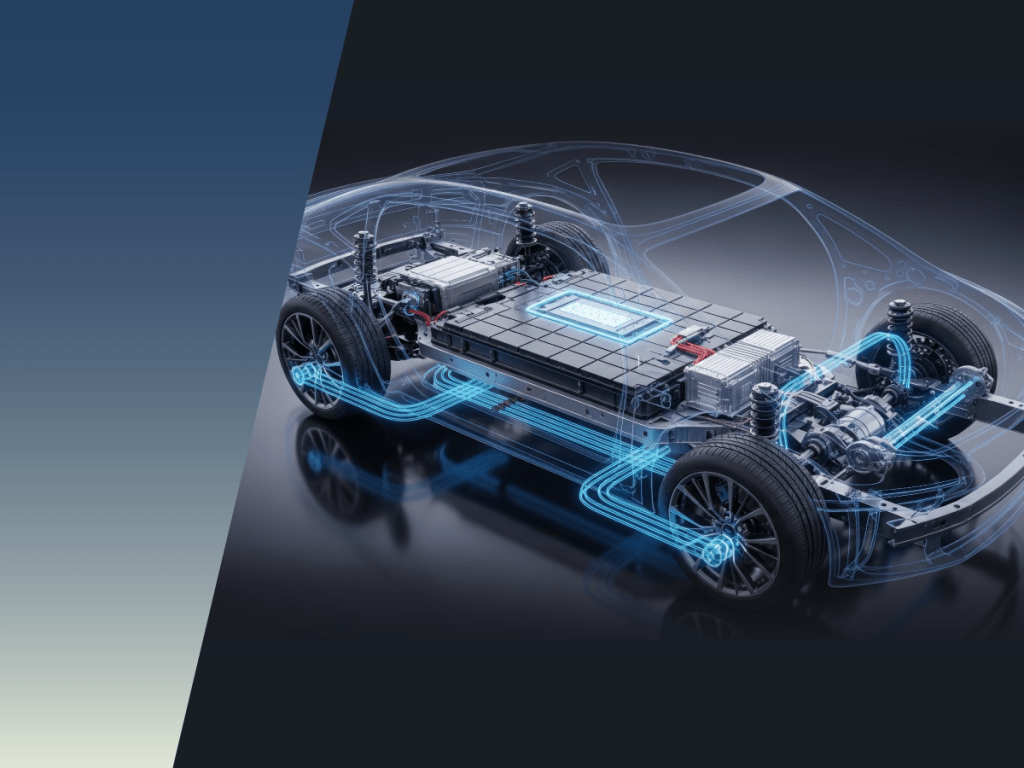
Reliable Sensing for Safer, More Efficient EV Systems
Learn how reliable sensing supports safer, more efficient EV systems. Explore applications in battery management, charging systems, fluid monitoring, and safety detection and discover how advanced sensing technologies help improve performance, reliability, and operational safety.
-

Designing High-Density Switching Architectures Without Sacrificing Precision
Learn how engineers can increase channel density while managing capacitance, crosstalk, and PCB design constraints in modern semiconductor test systems.